

“Oh, have you tried it? It’s SO good.”
Oil pulling. Turmeric lattes. Intermittent fasting. I kept hearing people talk about these things like they’d just found gold.
And I’d smile.
Because I’d just gotten off the phone with my grandfather. The man who had been doing all of it for seventy years — and who went on to found the Jindal Naturopathy Institute, one of India’s most respected natural healing centres.
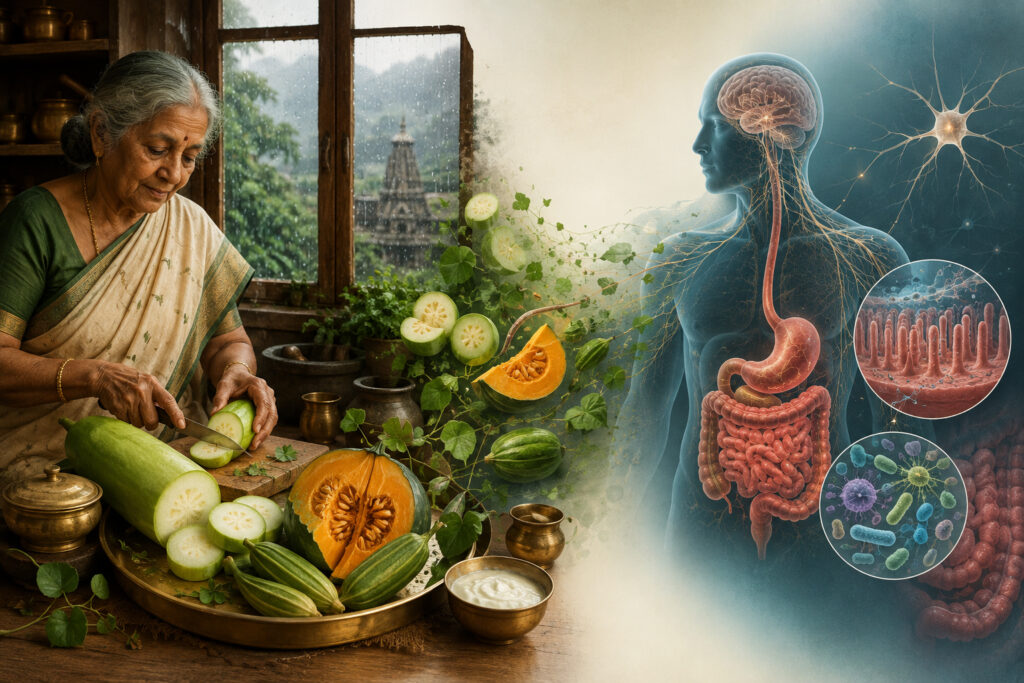
I found my way into these practices through research and scientific validation. But every time I discovered something “new,” I’d realise he’d been living it for decades. And my grandmothers, too — who had their own deep well of wisdom, a natural remedy for every ailment, passed down without a label or a price tag.
Every “new” ritual I discovered, they’d already been living.
Eventually, I stopped looking forward for answers and started looking back.
That shift is why I became a low tox living coach. And it’s why I wrote this.
What Is Ama — And Why It’s the Root of Everything
Before I get into the rituals, you need to understand why they work.
Ayurveda — India’s 5,000-year-old healing system — identified something called Ama. Toxic residue. Built up from poor digestion, chronic stress, processed food, and environmental pollution.
Sound familiar?
That’s because modern science calls the exact same thing metabolic waste, systemic inflammation, toxic load.
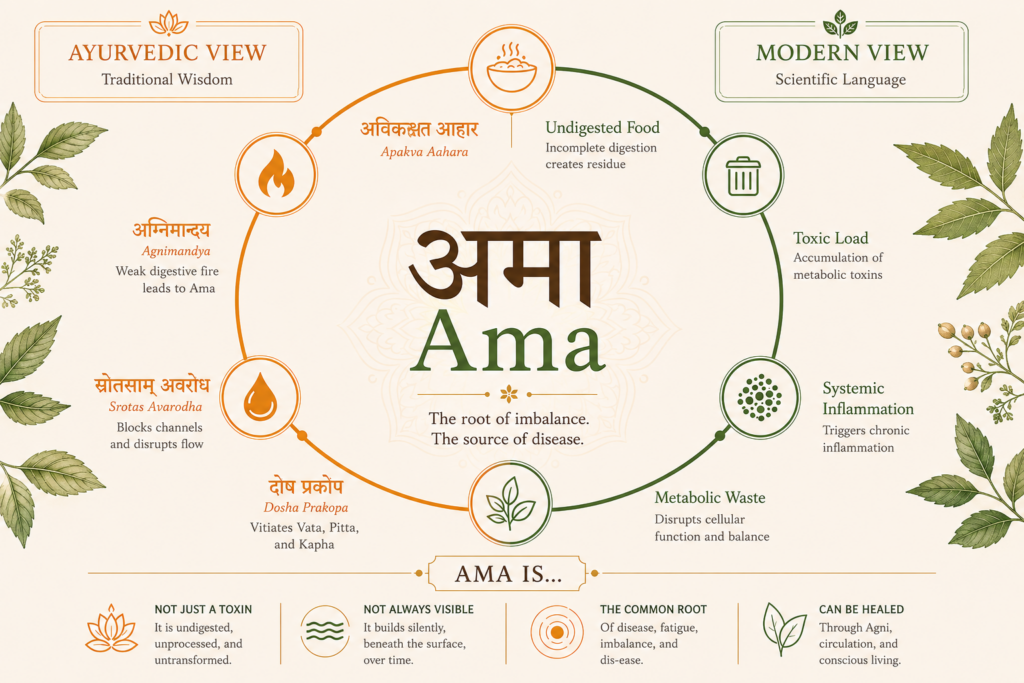
Ayurveda named it 3,000 years earlier.
The Charaka Samhita (~600 BCE) didn’t just name the problem — it mapped out a complete, personalised detox system based on your body type. Vata. Pitta. Kapha. That’s personalised medicine, millennia before Silicon Valley discovered the concept.
Dinacharya — The Daily Detox Routine Your Body Has Been Waiting For
This is the one I recommend first to every client who comes to me for a low tox morning routine reset.
- Dinacharya. The Ayurvedic daily routine.
Not a 21-day program. Not a seasonal cleanse. A daily system built into life itself. And the most powerful non-toxic swap you’ll ever make is simply changing what you do in the first 30 minutes of your morning.
Here’s what it looks like:
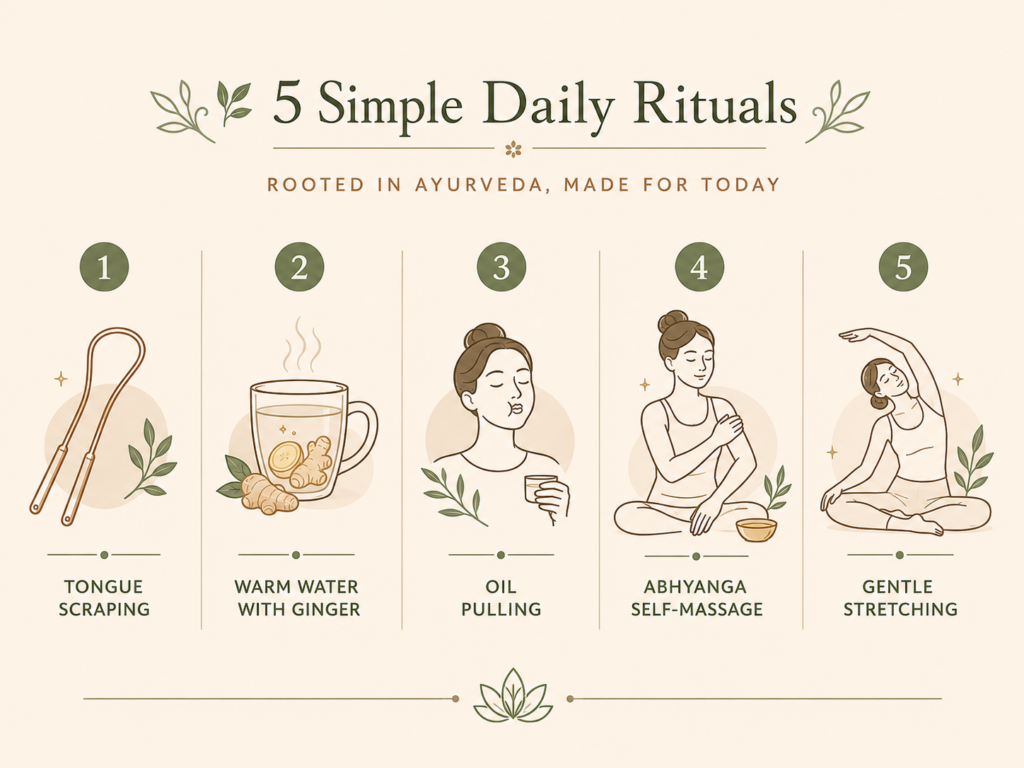
- Tongue scraping — first thing. Before you drink anything, before you brush. Overnight, your body deposits Ama on your tongue. Scraping it removes that residue before it gets swallowed back in. Modern research confirms it reduces volatile sulfur compounds by up to 75%. Your dadi’s copper tongue scraper wasn’t old-fashioned. It was ahead of its time.
- Warm water with ginger — before coffee, before breakfast, before anything. It wakes up your digestive fire (Agni) and flushes the kidneys. This is the Ayurvedic equivalent of rebooting your system every morning.
- Oil pulling (Kavala) — swish a tablespoon of sesame oil for 10 minutes. The Charaka Samhita cited 30+ systemic benefits. Instagram discovered it in 2014 and called it a trend. It was never a trend. It was always a tool.
- Abhyanga — warm oil self-massage before your shower. Stimulates the lymphatic system. Reduces inflammation. And honestly? It’s the most grounding thing you can do before a busy day. I do it three times a week. Even five minutes counts.
The Kitchen Remedies That Science Finally Caught Up To
Let’s talk about the non-toxic swaps hiding in plain sight.
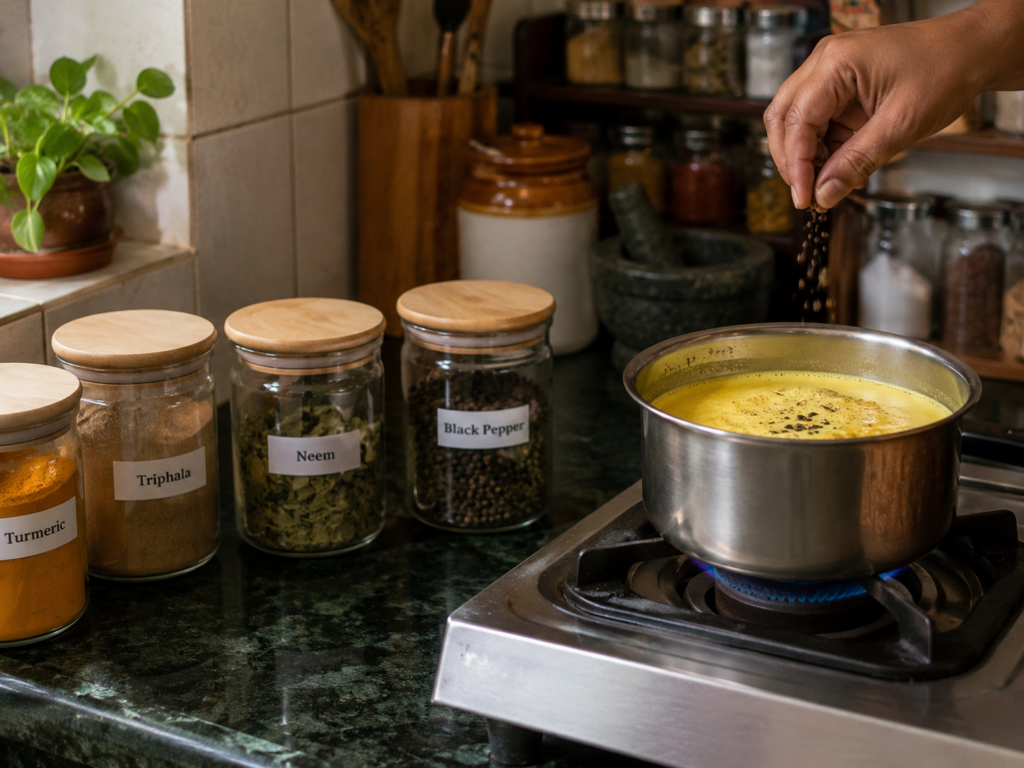
- Haldi (Turmeric). Used medicinally in India for over 4,500 years. Curcumin — its active compound — now has more than 5,000 published scientific studies behind it. Anti-inflammatory. Antioxidant. Neuroprotective. When you cook haldi with black pepper, the piperine in the pepper increases curcumin absorption by 2,000%. India always cooked them together. It wasn’t coincidence. It was wisdom.
- Neem. Antibacterial. Antifungal. Antiviral. Neem twigs were the original toothbrush — and modern research confirms neem-based oral care is as effective as chlorhexidine for reducing harmful oral bacteria. The village pharmacy, they called it. Accurate.
- Triphala. Three fruits — Amalaki, Bibhitaki, Haritaki. Used for over 1,000 years as a gentle gut-healing tonic. In 2017, the NIH published research confirming that Triphala’s polyphenols actively modulate the human gut microbiome — promoting beneficial Lactobacillus and Bifidobacteria while suppressing harmful strains. Your nani’s before-bed kadha? That was a probiotic protocol.
Why Ekadashi Fasting Is the Most Underrated Gut Reset in the World
Every two weeks, on the 11th day of the lunar cycle, many Indians traditionally fast.
Not for weight loss.
For systemic rest.
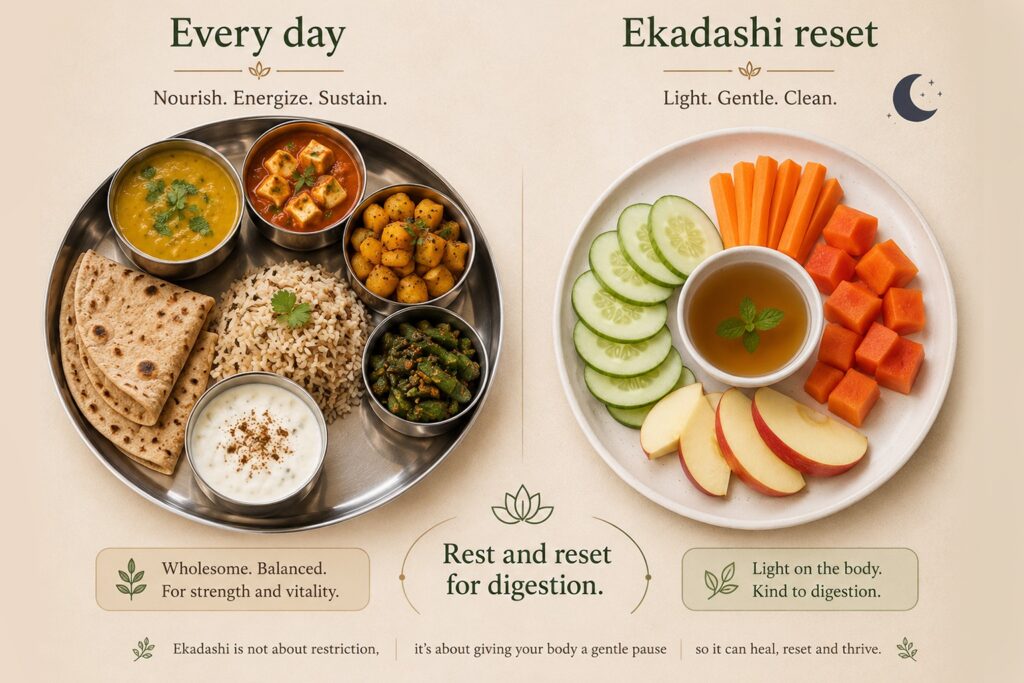
Ekadashi fasting gives the digestive system a profound break. It clears accumulated Ama. It resets the gut lining. And the mechanism modern science uses to describe what happens at the cellular level during this kind of fast?
Autophagy. Cellular self-cleansing.
It won the Nobel Prize in Physiology or Medicine in 2016.
Intermittent fasting became a biohacking trend that same year. Ekadashi has been practised for 3,000+ years.
The timeline writes itself.
Start Here — 6 Ancestral Detox Rituals for a Low Tox Life
You don’t need a program. You need a starting point.
- Scrape your tongue every morning — before water, before brushing
- Drink warm water with ginger — first thing, every day
- Cook haldi with black pepper — every single meal you can
- Try Abhyanga — oil massage before your shower, 3x a week
- Take Triphala before bed — one of the gentlest gut resets available
- Try one Ekadashi fast — skip grains for a day, this month
No expensive kit required.
Everything you need has been in your culture all along.
I spent years looking outward for answers that were always right here. The low tox life isn’t something you build from scratch — it’s something you remember, one small ritual at a time.
Start with one. See how it feels.
Then come back and tell me which one you chose.
Citations
- Priya Vembu et al., “Therapeutic Uses of Triphala in Ayurvedic Medicine,” Journal of Alternative and Complementary Medicine, 2017. PMC5567597. https://pmc.ncbi.nlm.nih.gov/articles/PMC5567597/
- Amala Soumyanath et al., “Turmeric, the Golden Spice,” Herbal Medicine: Biomolecular and Clinical Aspects, NIH Bookshelf NBK92752. https://www.ncbi.nlm.nih.gov/books/NBK92752/
- Asokan S. et al., “Tooth brushing, oil pulling and tissue regeneration,” Ancient Science of Life, 2011. PMC3131773. https://pmc.ncbi.nlm.nih.gov/articles/PMC3131773/
- Yoshinori Ohsumi, Nobel Prize in Physiology or Medicine 2016 — for his discoveries of mechanisms for autophagy. Nobel Media AB.
- Singh A. & Purohit B., “Tooth brushing, oil pulling and tissue regeneration: A review of holistic approaches to oral health,” Journal of Ayurveda and Integrative Medicine, 2011.