

It’s never a lack of caring.
It’s this quiet promise we make to ourselves: “I’ll do it properly when life slows down. When the kids are older. When I’m less tired. When the house doesn’t feel like a cyclone.”
So we keep waiting for a season that never really comes.
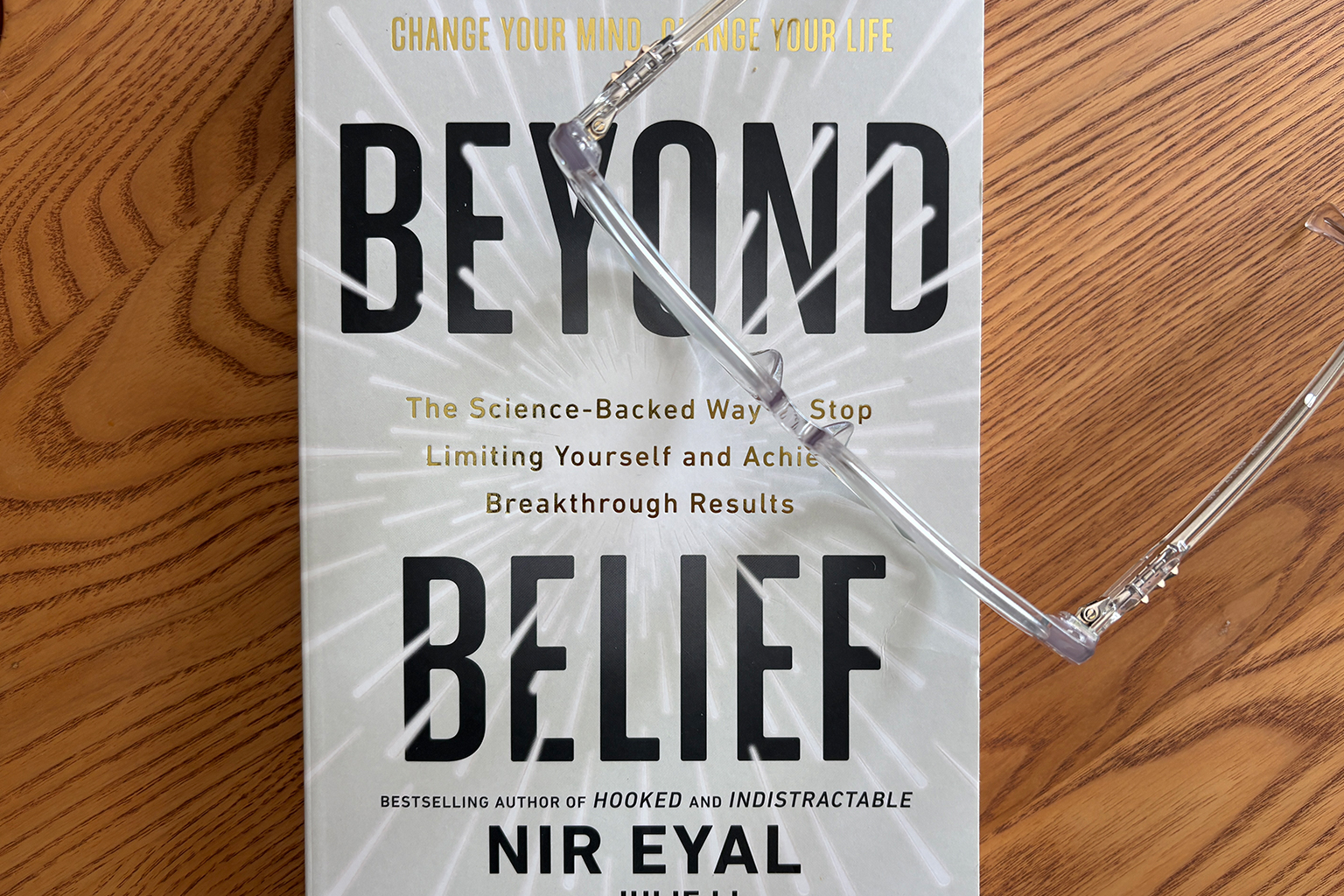
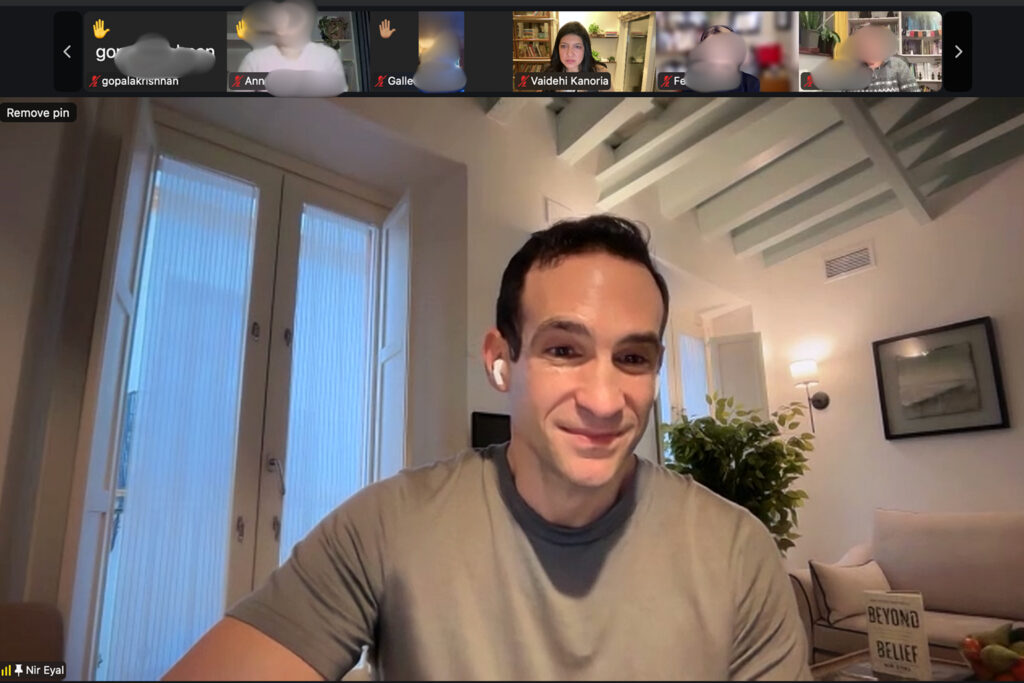
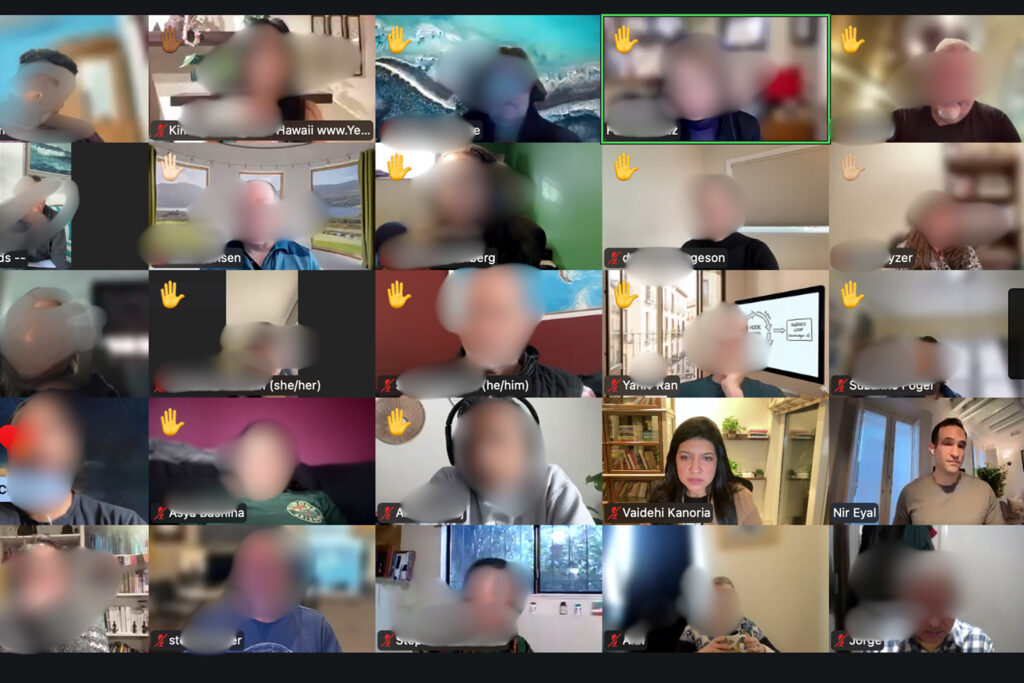
I know this pattern so well. And after being part of Nir Eyal’s pre-launch, author-led book club for Beyond Belief, I could suddenly see it more clearly: sometimes the thing keeping us stuck is not lack of information, but the belief that change will be easier later.
- You don’t need a perfect season.
- You need a more useful belief.
If this idea already feels personal, Beyond Belief is out now and available anywhere books are sold.
The “later” trap
A lot of people want to make non-toxic swaps in their homes. They want a better morning routine, a calmer evening rhythm, cleaner products, less fragrance, less plastic, less overstimulation.
But they tell themselves things like:
- “I’ll start after this busy month.”
- “I’ll focus on this once the kids’ schedule settles.”
- “I need one clear weekend to reset everything.”
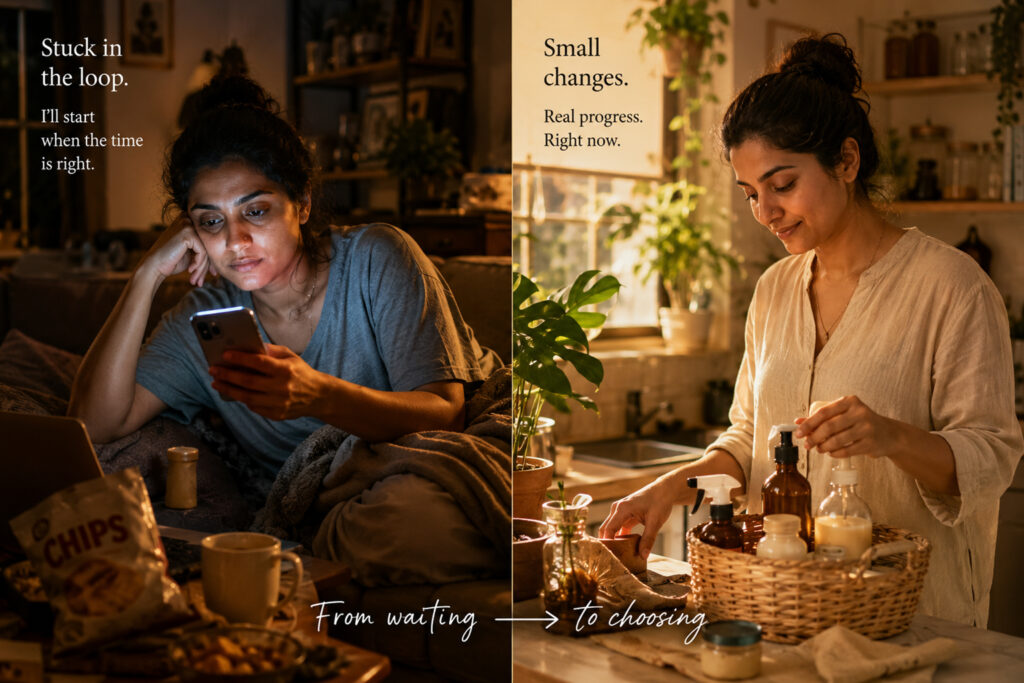
The problem is that life rarely opens up in the neat, spacious way we imagine. So the belief that “later will be easier” becomes a quiet form of procrastination.
Why the brain keeps postponing
Nir Eyal’s work argues that procrastination is not a personality trait. It is a way of coping with uncomfortable emotions that come up around difficult tasks.
That matters so much in low-tox living. Because changing your home is not just practical, it’s emotional. You may need to question old habits, spend money differently, read labels more carefully, or deal with pushback from family. Your brain predicts effort and friction, then whispers: “Not now.”
And that whisper can sound incredibly reasonable.
Low-tox change does not begin with a reset
This is the part I come back to in my coaching again and again: people think they need a full home overhaul to begin. They don’t. They need one grounded action – that proves to themselves – change is possible.
A low-tox life is not built in one dramatic weekend. It is built in ordinary moments over time: swapping one cleaning product, opening the windows, replacing one synthetic room spray, moving your phone out of the bedroom, creating a quieter evening ritual.
Small actions calm the nervous system because they create evidence. Evidence that says, “I can do this even in a full life.”
What I see with clients
As a wellness and low-tox living coach, I help people make safer swaps at home and update their morning and evening routines. But honestly, the deeper work is often not about the products. It is about the story running underneath them.
The story is often:
- “I’ve lived this way too long.”
- “I’ll do it properly later.”
- “I need the right phase of life before I start.”
That belief drains agency before any action begins. And the book Beyond Belief makes the case that our beliefs shape what we notice, what we attempt, and what we achieve.
A better belief to practice

Instead of asking, “When will life calm down enough for me to begin?” try asking:
“What can I change inside my real life, as it is?”
That question is softer. More honest. More useful. It shifts you out of fantasy and back into agency.
Try this today:
- Choose one room, not the whole house.
- Choose one swap first, not five.
- Choose one routine anchor, morning or evening.
- Choose one belief to question: “Does waiting actually serve me?”
That is how momentum starts.
What I’m taking from the book
My biggest takeaway from Beyond Belief is this: change sticks when belief changes first. Not perfectly. Not all at once. But enough for you to stop worshipping a future version of life and start acting in the one you already have.
There’s one line I loved so much, I’ve written it out from the book and taped it to my dresser mirror:
“When your life feels chaotic, remember: Disorder isn’t a sign that you are failing at life; it’s proof that you are fully immersed in it. The goal isn’t to eliminate disorder (that’s impossible); rather, it is to develop a productive relationship with it.”
I come back to this on the days my home feels loud, the schedule is messy, and yet I’m still trying to move us toward calmer, lower-tox rhythms. It reminds me that I don’t have to wait for the chaos to disappear. I just have to keep building a more productive relationship with it, one small choice at a time.
And honestly, that lands deeply in low-tox living. Because healthier homes are not created by ideal circumstances. They are created by people who begin before they feel fully ready.