
I used to think I was being careful.
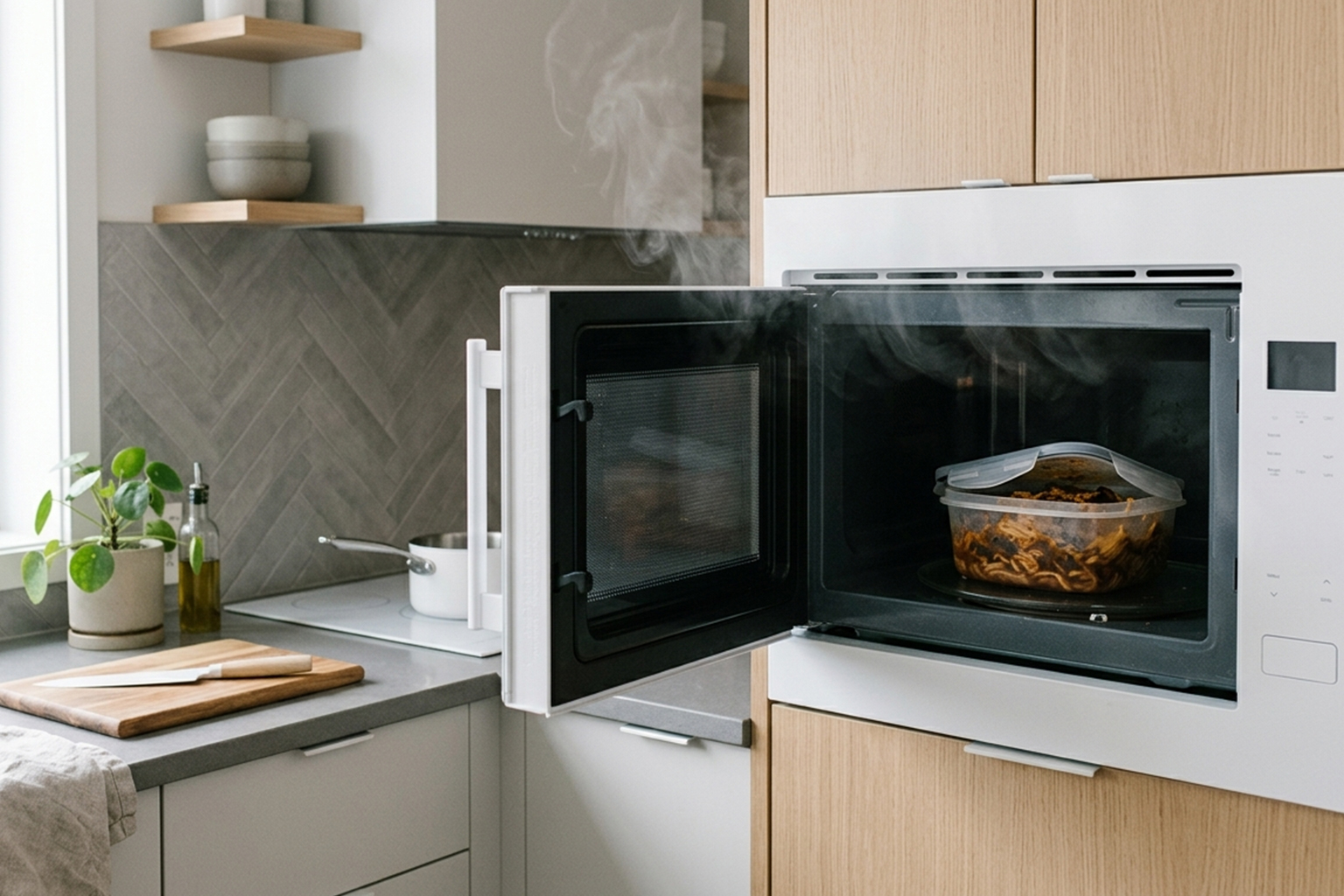
I didn’t microwave food in flimsy takeaway boxes.
But I did use that plastic microwave cover.
Because… “it’s made for the microwave, right?”
Wrong.
And once I read the research, I couldn’t unsee it.
What Really Happens When You Heat Plastic
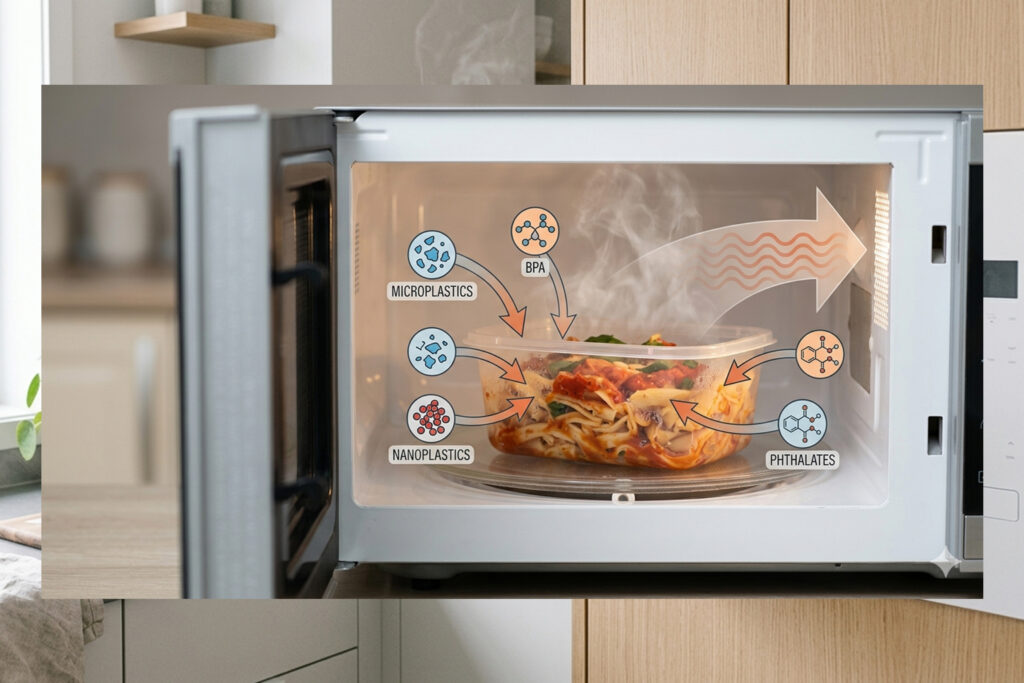
When plastic meets heat, it doesn’t just sit there quietly.
It breaks down.
It releases.
- Microplastics
- Nanoplastics (so small you can’t see them)
- Hormone-disrupting chemicals like BPA, BPS, phthalates
One analysis of 24 studies found:
Up to 534,000 microplastic particles can leach into food in just 5 minutes.
Let that sink in.
That’s not random exposure.
That’s daily accumulation.
“Microwave Safe” Is… Marketing
Here’s the part that frustrates me the most.
“Microwave safe” does NOT mean safe for your health.
It simply means:
– The container won’t melt or crack.
That’s it.
It says nothing about chemical leaching.
Nothing about microplastics.
Nothing about long-term exposure.
And plastics?
They contain over 4,000 chemicals. Most are barely regulated.
The Microwave Cover Problem No One Talks About
This one shocked even me, and I wondered why I never thought about it!
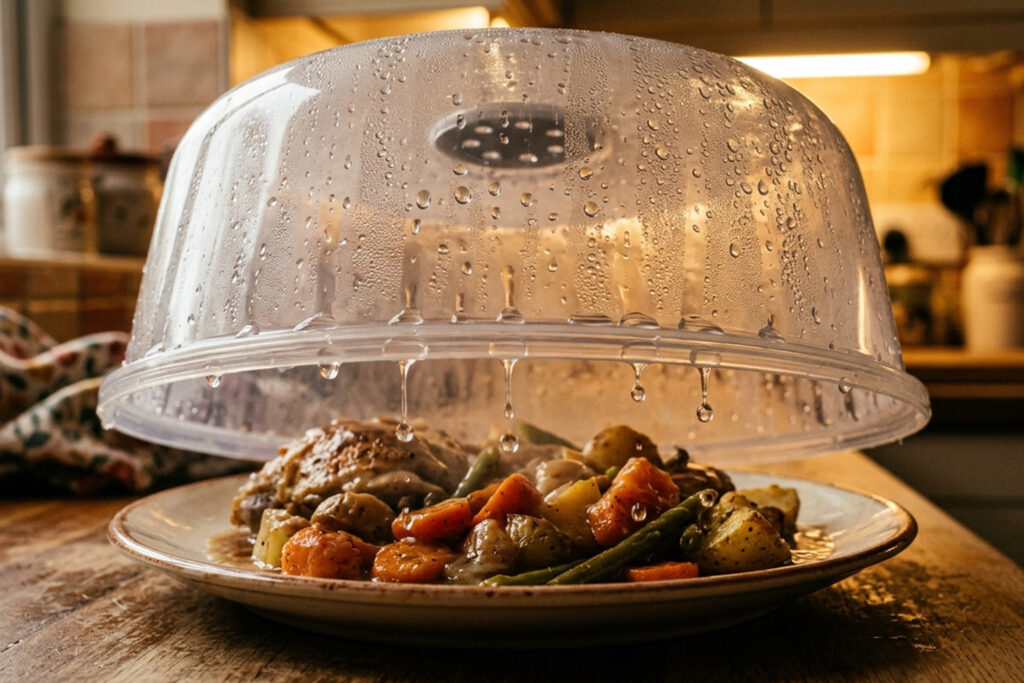
That plastic lid you put on top of your food?
It creates a perfect toxin delivery system.
Here’s what happens:
Steam rises → condenses on the plastic → absorbs chemicals → drips back into your food.
Yes.
That water dripping down?
It’s not just water anymore.
Studies show:
- Up to 4.22 million microplastic particles released per cm² in minutes
- And billions of nanoplastics
Even worse if your cover is old, scratched, or used daily (which most Indian kitchens are).
Why This Matters for Your Health
These chemicals don’t just pass through.
They accumulate.
Research links them to:
- Hormone disruption
- Infertility
- Breast & prostate cancer
- Metabolic disorders
- Neurodevelopmental issues
And here’s the part that stays with me:
1,396 plastic-related chemicals have already been detected inside human bodies.
Not outside.
Inside.
It Doesn’t Get Better With Time (It Gets Worse)
Old plastic = more damage.
Scratched containers release significantly more particles.
Even storing food in plastic in the fridge?
Still leaching.
Cold doesn’t make plastic safe.
It just slows the process.
The Simple Low-Tox Kitchen Swaps
This is the part I always tell my clients:
You don’t need perfection. You need better habits.
Start here:
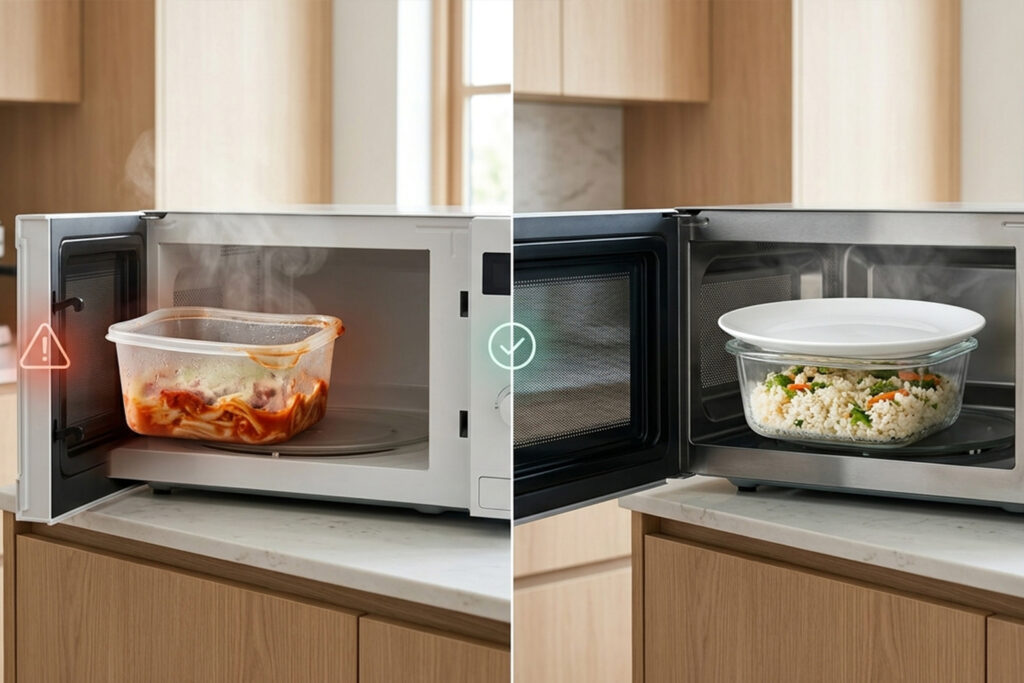
- Heat food only in glass or ceramic
- Use a ceramic plate or glass lid instead of plastic covers
- Store leftovers in steel or glass
- Switch to wooden or bamboo cutting boards
- Replace plastic water bottles with steel or glass
- Use beeswax wraps or brown paper instead of plastic wrap
Small shifts.
Massive impact.
This is exactly how I approach home detox—simple, practical swaps that actually stick
If this made you pause… good.
That’s where change starts.
What’s one plastic item in your kitchen you can swap today?
References
- Greenpeace — Microplastics in Food Contact Materials: Review of 24 Studies
- Environmental Health Perspectives (Rochester, 2013) — Bisphenol A and Human Health
- Food Packaging Forum — Database of Food Contact Chemicals
- Hussain et al. (2023) — Microplastic & Nanoplastic Release During Microwave Heating
- FCP Live-In (2022) — Phthalate Migration in Heated Plastics
- Healthline (2023) — Is It Safe to Microwave Plastic?
- CNET (2024) — Microwave Covers and Plastic Safety
- Groh et al. (2019) — Plastic Packaging Chemicals & Hazards
- World Health Organization (2019) — Microplastics in Drinking Water