

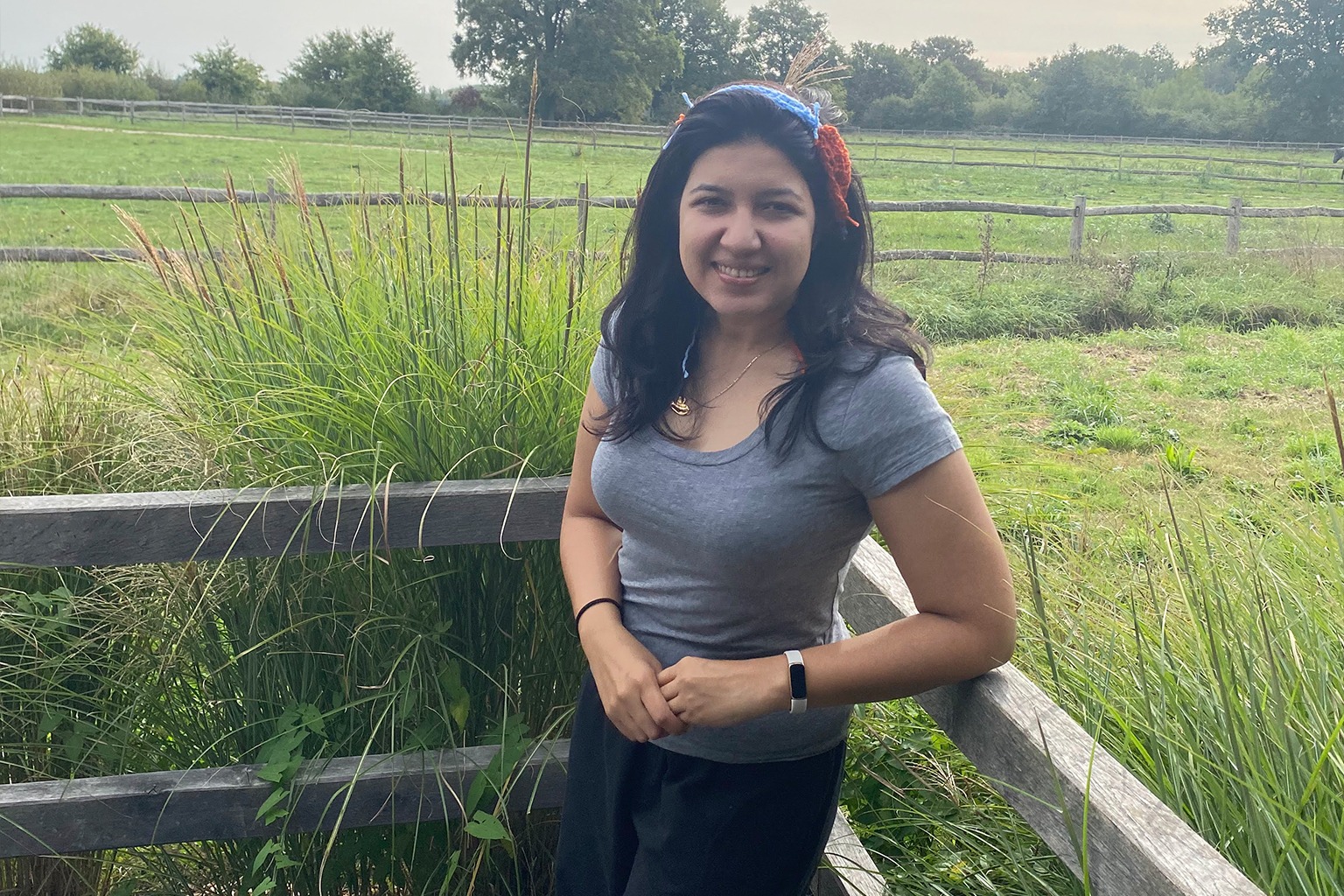
Most people come to me wanting to detox their home.
They expect a list of products to throw out. The toxic cleaners. The synthetic fragrances. The plastic food containers that smell like last year’s rajma.
They do not expect me to also say:
“Step outside. That’s the detox we have to add back.”
Your Body Was Not Built For Indoor Life

We evolved under the sun, on soil, surrounded by trees and moving water. Our nervous system is calibrated to birdsong, not notification pings.
But modern life?
We spend about 90% of our time indoors — awake and asleep — under flickering LED lights, breathing recycled and polluted air, surrounded by off-gassing furniture and screens.
- Your biology is ancient.
- Your environment is not.
That mismatch shows up as:
- Constant low-grade anxiety
- Tight chest and racing thoughts at night
- Brain fog that three coffees can’t fix
- Blood pressure (and labs) quietly creeping up
Here’s where nature walks in like that friend who tells you the uncomfortable truth.
What A “Nature Dose” Actually Does To Your Body
Let’s get specific.
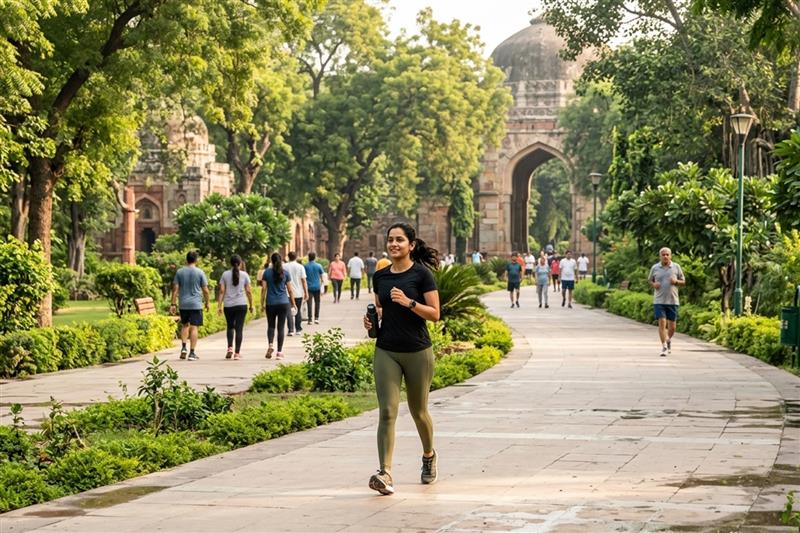
Just 20–30 minutes in a natural setting (a park, garden, quiet tree-lined lane) has been shown to drop cortisol — your main stress hormone — by around 20%. That’s not a wellness-influencer claim; that’s actual salivary cortisol data from researchers giving people a “nature pill.”
A 90‑minute Stanford study walk in nature did something even wilder:
- It reduced rumination (those repetitive, self-critical thought loops that keep you awake at 2 a.m.)
- It quieted activity in a brain region linked to depression
- Urban walks on a busy street did not show the same shift
Your brain literally calms down differently around trees than it does around traffic.
Then there’s inflammation. One large study looked at over a thousand adults and found that people who regularly engaged with nature had lower inflammatory markers (things like CRP and IL‑6) – the same markers tied to heart disease, diabetes, and early death.
And your heart? Forest-based practices like “shinrin-yoku” (forest bathing) have been shown to lower systolic blood pressure by around 7–8 mmHg in people with elevated readings. For some, that’s in the same ballpark as a first-line medication.
All from walking among trees. Breathing. Existing.
Why This Matters For Low-Tox Living
You’ve definitely heard me talk about:
- Swapping synthetic room fresheners for real ventilation and diffuser lamps
- Moving from harsh floor cleaners to simple essential oils and wATER
- Choosing cookware and storage that don’t leach microplastics into your dal
All of that is so important.
But there’s a second half to detox that often gets ignored:
It’s not just what you remove. It’s how you restore.
Nature supports detox pathways in ways our “optimized” routines forget:
- Fresh outdoor air dilutes indoor VOCs and stale CO₂
- Trees release phytoncides (plant compounds) that can lower inflammation and support immune cells
- Contact with soil microbes trains your immune system instead of keeping it in a sterile bubble
- Sunlight helps reset circadian rhythm, which supports liver detox and hormone balance
So when you step outside, you’re not just “taking a walk.”
You are giving your nervous system, immune system, and detox organs a little bit of the environment they were designed for. Scientists are constantly discovering even more benefits of nature that keep expanding!
How To Build Your Daily Nature Ritual (Even In A City)

Let’s make this practical. I’m a working mom in a polluted Indian city—I get it. We’re not all living next to a pine forest. In fact, I paused writing this article this morning because the weather was so beautiful I had to step onto my balcony!
Here’s how I coach clients to build real nature time into packed days:
1. The 20-Minute Morning Reset
- Before you touch your phone – open a window or step onto a balcony/terrace
- Put your bare feet on ground if you can (grass, mitti, even cool tiles)
- Breathe slowly, exhale longer than you inhale
- Look at something alive: tree, plant, sky, even a single potted money plant!
No podcast. No email. Just nervous system downshift.
2. The Green Commute Hack
- If you drive or take a cab, park a little further away near trees. Walk the last 10 minutes under shade.
- If you metro or bus, get off one stop early near a park and walk through it.
You just turned a commute into a blood-pressure and cortisol intervention.
3. The 90-Minute Weekly “Brain Wash”
Once a week, aim for a longer walk in the greenest place you can reasonably reach:
- City park
- Biodiversity park
- Lakeside path
- Neighborhood with big old trees
Leave the phone on silent. Let your mind wander. That’s the rumination reset your brain is craving.
4. Night-Time Balcony Ritual
Instead of doom-scrolling in bed, go stand outside for 5–10 minutes.
Feel the air on your skin. Listen to the city sounds soften. Let your eyes land on the horizon, not a screen.
Tell your body: “Day is done.”
Better sleep. Lower late-night snacking. Less anxious wake-ups.
Tiny Nature, Big Shifts
You can keep your gym membership.
Your supplements. Your trackers.
But if your days are only artificial light, stale air, synthetic scents, and minimal contact with the living world, your detox work is always going to feel like pushing a boulder uphill.
Start with this instead:
- **Twenty minutes outside today.
- Ninety minutes in nature this week.
Repeat.**
- Your body will recognize the feeling immediately.
Because this is what it was built for.
And if you want help pairing low-tox home swaps with a nature-based morning and evening routine that actually fits your life, you know where to find me.
Key Research
- Bratman GN et al. Nature experience reduces rumination and subgenual prefrontal cortex activation. Proceedings of the National Academy of Sciences, 2015.
- Berman MG et al. The cognitive benefits of interacting with nature. Psychological Science, 2008.
- Hunter MC et al. Urban nature experiences reduce stress in the context of daily life. Frontiers in Psychology, 2019.
- Ong AD et al. Engagement with nature and proinflammatory biology. Brain, Behavior, and Immunity, 2024.
- Park BJ et al. Effects of forest bathing on cardiovascular and metabolic parameters. Various forest bathing studies, 2010 onward.