

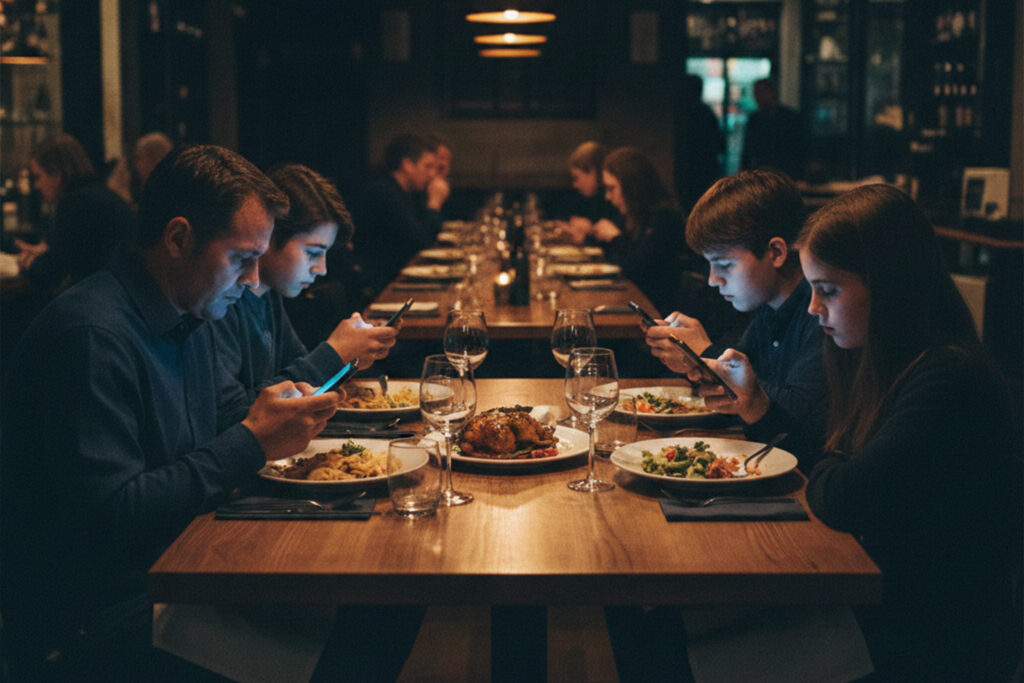
I was at a resort restaurant during school winter break, watching a family of four at the next table.
Parents on opposite ends. Two teenagers between them. All four looking at their screens.
Forty-five minutes. Maybe three words exchanged. They ate while scrolling, then left. Together but… not really.
I see this everywhere now—airports, cafes, weddings.
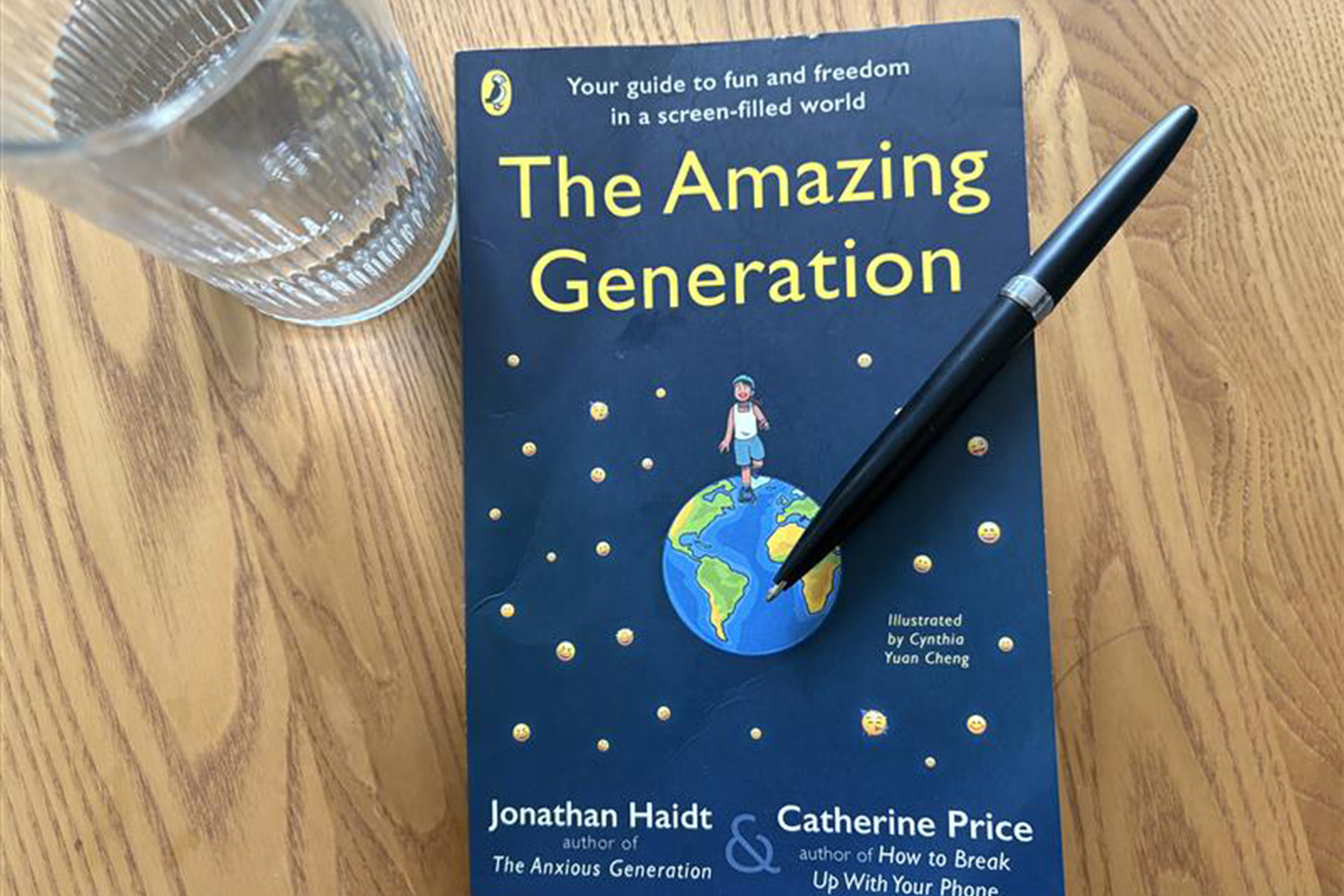
But there is hope on the horizon! Buy the Amazing Generation by Jonathan Haidt and Catherine Price immediately!! And continue reading…
The Mental Health Crisis Nobody Saw Coming
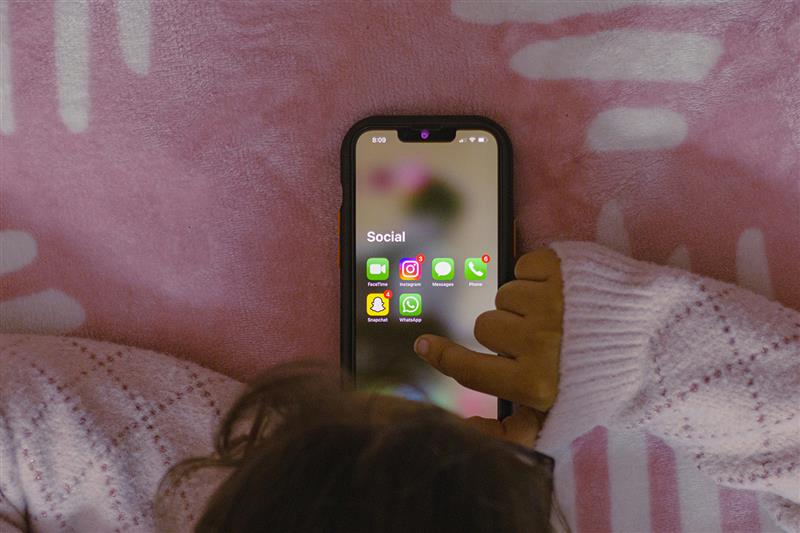
Between 2010 and 2015, teen depression rates doubled. Anxiety skyrocketed. Self-harm became epidemic.
The culprit? The smartphone.
Social psychologist Jonathan Haidt documented this in his 2024 book The Anxious Generation. The data hit me hard—across countries, the correlation between smartphone adoption and declining teen mental health is undeniable.
- The numbers are stark: girls spending 5+ hours daily on social media are three times more likely to be depressed than girls who spend little or no time on it. For boys, it’s twice as likely. Not just sadness—clinical depression.
- This is happening everywhere. From Delhi to Chennai, Sydney to New York.
The Four Ways Phones Wreck Developing Brains
Social Deprivation
Your daughter might have 1,000 Instagram followers and still feel completely alone. As 18-year-old Samara Gorton puts it in The Amazing Generation: “A lot of growing up is about self-discovery, and I just don’t think you’ll ever find yourself through your phone.”
Online “connection” starves the brain of real human contact needed for emotional regulation and learning conflict resolution.
Those birthday wishes on Instagram stories that get reposted all day? Not deepening friendship. Just noise.
Sleep Deprivation
Phones in bedrooms mean late-night scrolling and blue light destroying melatonin production.
Teens need 8-9 hours; most get a measly 6. I moved all charging to our living room a while ago—my kids are just used to that now!
Attention Fragmentation
Constant notifications create self-inflicted ADHD during the exact developmental window when brains should learn sustained focus. As an adult also, if you’ve spent enough time consuming Instagram Reels or YouTube Shorts, you’ve felt this—as soon as content feels even slightly slow, you get an irresistible urge to swipe.
By doing this repeatedly our kids are literally rewiring their brains to be unable to focus on homework, conversations, or anything that moves slower than a YT shorts feed.
“Brain rot” was Oxford Dictionary’s 2024 word of the year—referring to meaningless online junk that makes you feel like your brain is rotting. That’s not metaphorical. It’s actually happening.
Addiction by Design
- Social media platforms engineer compulsion. Likes, comments, shares—each triggers dopamine hits identical to gambling. Companies have psychologists designing features specifically to exploit developing brains.
- Here’s what really makes me angry: Tech CEOs don’t let their own kids use what they’ve created. The book Amazing Generation details how the CEO of TikTok doesn’t let his kids use TikTok. How the CEO of Snapchat limited his kids’ screen time to 90 minutes per week.
- One gaming company founder admits and is quoted in the book: “Knowing all the techniques we use to bring about addiction, I realized I didn’t want my children exposed to that risk.”
- A leaked Instagram document admitted: “We make body image issues worse for one in three teen girls.” They’re not just selling products—they’re exploiting insecurities they help create.
Countries Are Finally Fighting Back
The tide is shifting—and fast.
As I have been editing the article, I see news on this rolling in every day!
Australia led the charge, banning social media for under-16s effective December 2025. Now others are following.
Denmark plans a ban for under-15s starting as early as 2026, using national ID systems for enforcement (with possible parental exemptions for 13-14 year olds).
Norway is proposing raising the consent age to 15. Malaysia announced an under-16 ban effective 2026, with new licensing and age verification rules for platforms.
France is considering an under-15 ban plus a nighttime curfew for 15-18 year olds.
New Zealand’s government backs a bill mirroring Australia’s restrictions. The UK says “nothing is off the table” while monitoring developments. Even the EU passed a resolution supporting similar measures.
And India? Our high court has suggested modeling after Australia’s approach. We have already banned TikTok, hopefully more safeguards are on the way!
What You Can Actually Do Today
Before the government intervenes, start today!
- Tech-free zones have been huge. No devices at meals—including mine (I had to put my phone in a drawer). No phones in bedrooms after 8 PM. I am the one who struggles with this one, much more than the kids!
- Protecting sleep became non-negotiable. Eight to nine hours, period. Their mood and focus will improve so much that they themselves will start loving it!
- Replacing some screen time with real activities. Instead of having arguments about screen time limits, try to redirect their attention – pull out a board game that they love or play badminton with them or just challenge them to planks!
- Specific times for social media, not constant access. Like 30 minutes after school, 10 minutes after dinner? Any change in the right direction is better than none!
- Nurturing real friendships. In-person meetups, not just online chatting. It requires more coordinating for us, but shared physical experiences create bonds screens can’t.
Give Your Teen the Tools to Rebel
Haidt and Catherine Price created The Amazing Generation—a graphic novel for tweens and teens. I bought a copy which I leave lying around. When my daughter read about dopamine manipulation, something clicked. She started calling out when she felt the pull.
Because this can’t just be parent-imposed rules. They need to understand why.
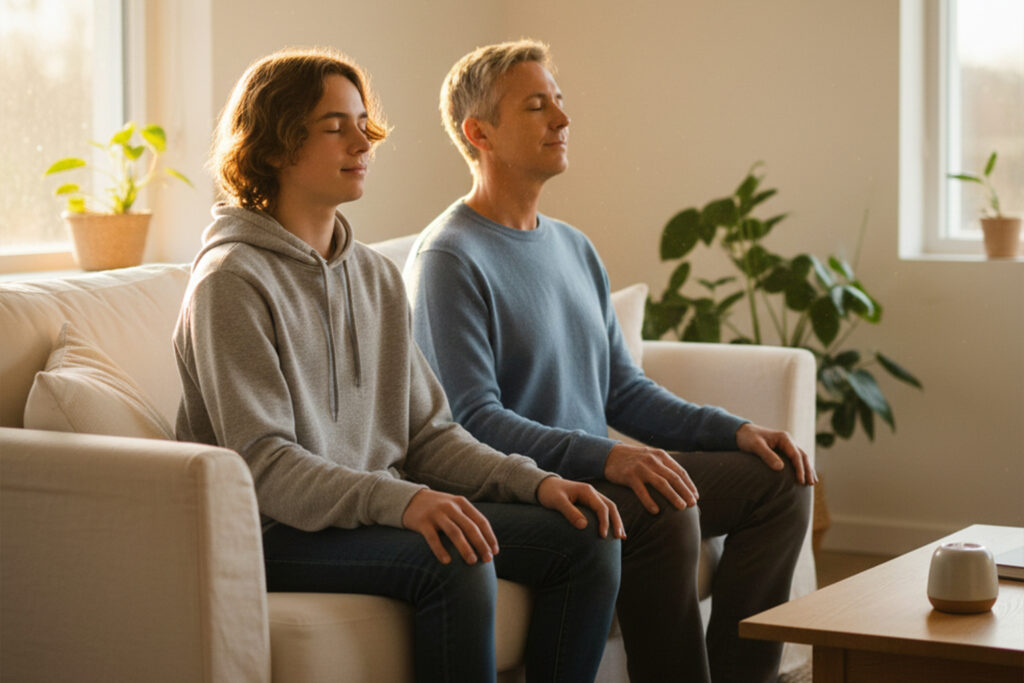
- The book suggests an exercise that both parents and kids can do—I’m trying it myself: Pick a consistent time—maybe right when you wake up or just before sleep. Close your eyes and count each breath cycle (one inhale + one exhale = one count). Your mind will wander off—that’s normal—just notice it and come back to counting.
- See if you can get to 20 without losing track. Sounds easy? It’s not. Initially it feels impossible, but consistent practice rebuilds the attention span our phones systematically destroy.
- Another powerful practice the book suggests – regularly ask yourself, “Am I doing this for me or someone I care about, or am I doing it to show off or impress someone else?” That question cuts through so much of what drives social media use.
- As a natural living coach, I’ve seen families transform within weeks of these boundaries. Better sleep, improved moods, stronger relationships, increased focus.
- And here’s something validating: 22-year-old Ben from the book says when he tells people he’s not on social media, instead of judging him, they say that they wish they had done that!
- I’m not perfect at this. Last week I caught myself scrolling while my daughter tried telling me about her science project. I apologized and put my phone away.
But our kids’ childhoods aren’t waiting for us to get it perfect.
We just need to tweak ourselves on the journey!
Want help creating boundaries that work for your family?
Email: me at [email protected] or DM me on Instagram: @vaidehi.yournaturalguide to discuss personalized strategies for your home’s digital wellness transformation.