
Here’s something most people don’t realize: your weekly massage could be doing so much more than just relaxing you.
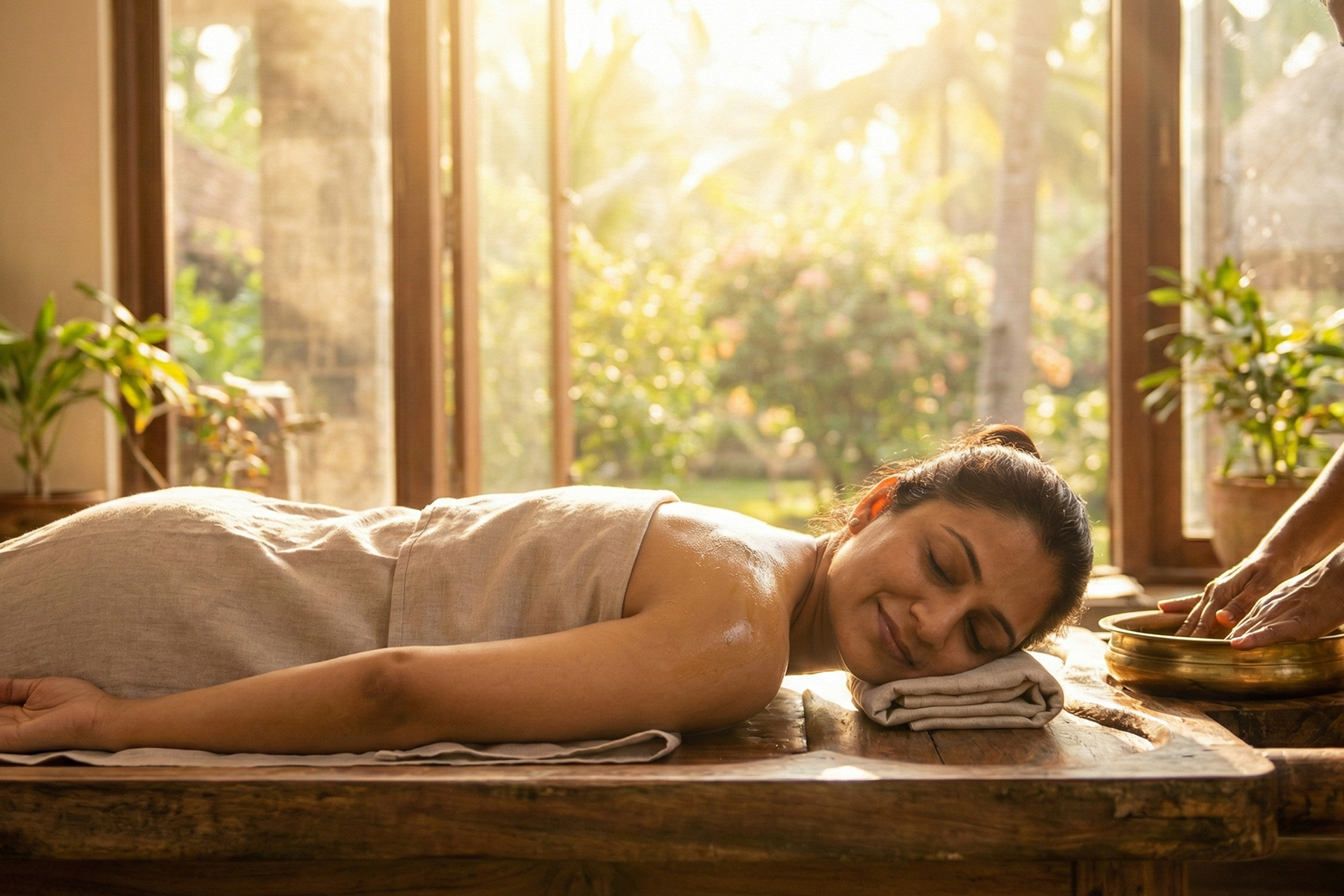
Growing up, to emphasise sunlight, I remember my grandfather talking about how even Mahatma Gandhi would get an oil massage outdoors to get his morning sun. Our ancestors knew that oil massage in sunlight isnt just wellness theater, it’s actually therapeutic. The warmth helps oil penetrate deeper while vitamin D production happens at the same time.
I used to treat massage as a luxury. Something I’d do when my shoulders were screaming or after a particularly stressful week or too much exercise. But now, following simple principles of Naturopathy, Ayurveda and modern science – I feel I really get much more out of my massage!
Why Your Massage Might Not Be Working
Most of us book a massage, show up, lie down, and leave. One more thing checked off a never-ending to-do list!
But here’s what I see happening constantly (and I’ve been guilty of it too): people lying on the massage table with their phones. Texting their team. Taking calls. Scrolling Instagram between face-down and face-up positions.
You’re literally paying someone to heal your body while your mind stays in the exact stress state that created the tension. Your nervous system can’t shift into repair mode when you’re still in “react to everything” mode.
Switch. Off. Your. Phone.
Better yet, leave it in your car or in another room at home. This is YOUR time. The whatsapps can wait an hour.
The phone thing aside, massage in Ayurveda is way more than just lying there feeling good. Its therapeutic—it actually works with how your body naturally detoxes. Do the prep, stay present during your session, follow through after, and you’ve turned what feels like pampering into real preventive healthcare.
Pre-Massage Prep (Start 30 Minutes Before)
Okay, here’s my pre-massage routine. Its made such a difference:
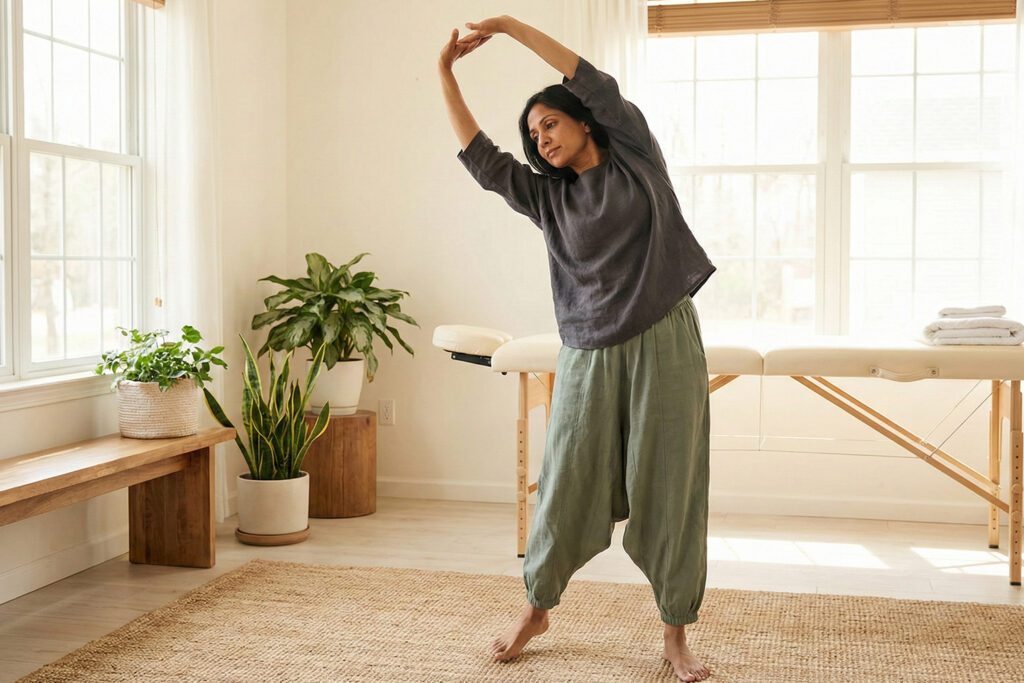
Get your lymphatic system going first—spend 10 minutes doing a quick yoga flow, stretching a bit, or just walking around. Unlike your heart, your lymphatic system has no pump. It needs movement to work. This is why the prep matters—your body can actually release toxins during the massage instead of just moving them around.
The navel oil trick: This sounds completely random but bear with me. Ask your massage therapist to put 2-3 drops of cold-pressed oil in your navel before starting. Its a traditional Ayurvedic practice that gets circulation moving through your whole core. My therapist side-eyed me the first time I asked, but now? I think she does it for everyone as part of her start.
Timing Matters – Much More Than I Thought
One mistake I made for years: booking a massage right after an intense legs workout. Turns out this actually disrupts your muscle recovery.
Your muscles need 24-48 hours after strength training to repair themselves. Massage during this window can interfere with that process. Now I schedule my weekly massage on rest days and my recovery has improved noticeably.
Also, once a week is the sweet spot. More than that and you’re potentially disrupting your body’s natural healing rhythm.
Seasonal Oil Selection: Working With Indian Climate
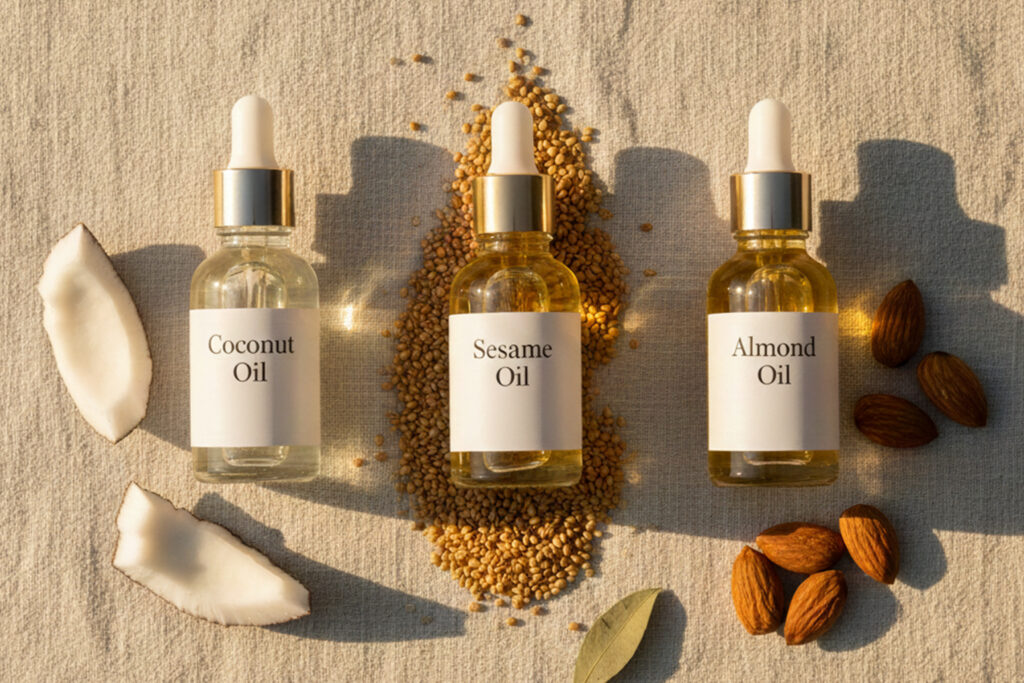
This is where Ayurveda’s wisdom really shines. Depending on where you live and weather, you have to choose your oils!
Summer months (March-June): Only coconut oil. The cooling properties combat heat and inflammation. In Delhi summers this is non-negotiable for me.
Winter (November-February): Sesame or almond oil becomes my go-to. They’re warming, penetrate deeper, perfect when your body needs that extra nourishment in the cold and dry weather of North India (a southern Indian winter may require a sesame oil, almond may be too heavy).
Monsoon season: I stick with light sesame oil. It prevents those dampness-related joint issues that everyone complains about during the rains.
You can also add essential oils based on what you want to target especially too:
- Lavender for sleep issues (I love this anyway)
- Eucalyptus for respiratory problems
- Lemongrass when you need an energy boost
Different Types of Massage: They’re All Good
Here’s the thing—whether you choose sports massage, potli (heated herb pouches), lymphatic drainage, or just a simple old-style oil massage, they all work. Don’t get paralyzed by options.
A simple, traditional oil massage done well beats a fancy technique done poorly. Focus on the principles I’m sharing here rather than chasing the latest massage trend.
Abhyanga: Your At-Home Complement
Between your weekly professional massages, try abhyanga—self-massage with oil. I do this 2-3 times a week, usually before my morning shower.
The traditional way: warm your oil slightly, massage your entire body with long strokes on limbs and circular motions on joints, let it soak for 15-20 minutes, then shower. If you can step out into the morning sunlight post this, even better. I try to incorporate this before exercise, read this article from my blog for more information – https://yournaturalguide.com/your-body-already-knows-book-review-7-ayurvedic-practices-i-loved/
The Post-Massage Protocol Nobody Talks About
This is where most people lose out on 50% of the benefits.
Within 30 minutes after your massage you need to open your pores and help eliminate the toxins that were mobilized during the session. I either take steam (even DIY with hot water and a towel works) or use a sauna if available. Gandhiji would use the real deal – soaking in the sun!
Then—and this is important—take a warm shower, not hot. Hot water can stress your relaxed system. Warm is perfect.
I learned this the hard way after feeling sluggish and headachy after early massages. Once I started following this protocol those symptoms disappeared.
The Science Behind the Ancient Wisdom
Traditional Indian massage focuses on marma points—basically like acupressure points in Chinese medicine. When these get stimulated properly they boost your circulation and activate lymphatic drainage.
Match that with the right seasonal oils for your body, time it properly, and boom—you’ve got what modern wellness experts are calling “biohacking.” Which honestly just makes me laugh because Indians have been doing this for thousands of years. We’re just rediscovering it.
My Weekly Massage Routine Now
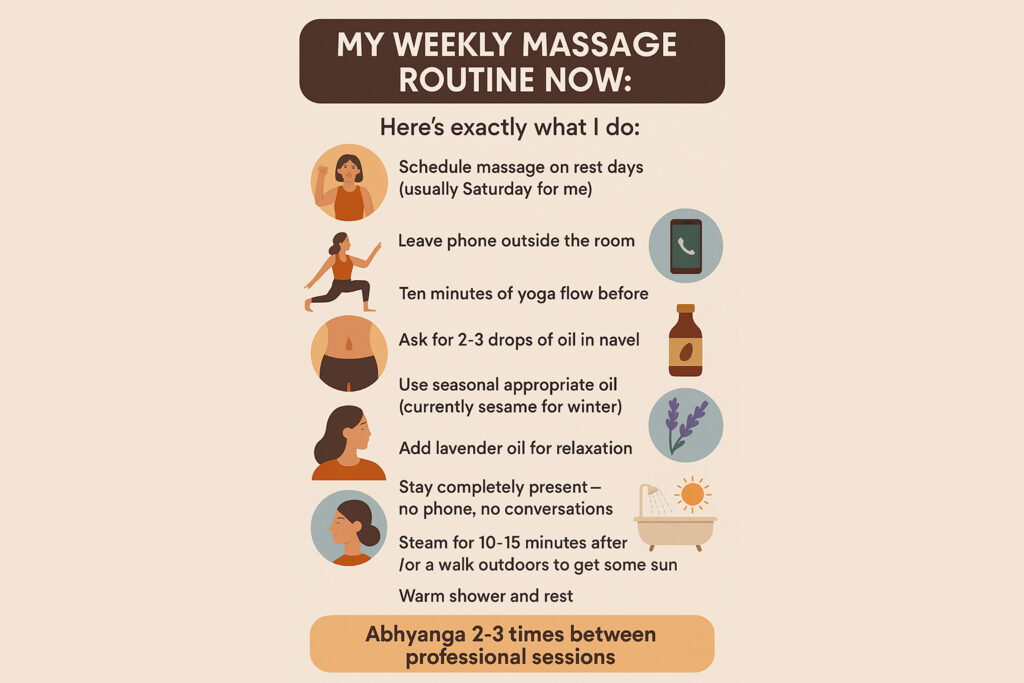
Here’s exactly what I do:
- Schedule massage on rest days (usually Saturday for me)
- Leave phone outside the room
- Ten minutes of yoga flow before
- Ask for 2-3 drops of oil in navel
- Use seasonal appropriate oil (currently sesame for winter)
- Add lavender oil for relaxation
- Stay completely present—no phone, no conversations
- Steam for 10-15 minutes after / or a walk outdoors to get some sun
- Warm shower and rest
- Abhyanga 2-3 times between professional sessions
Key Takeaways
Your massage isn’t just pampering, but preventive healthcare when done right. Phone off completely during sessions, let your nervous system actually heal. Do the gentle movement prep, choose oils based on season, time it properly with your workouts, follow through with sunlight, steam and warm shower.
Between your weekly professional massages, add 2-3 abhyanga sessions at home. The whole oiling in morning sunlight thing that Gandhi did? It combines so many healing benefits into one simple morning ritual.
Focus on the principles of the massage and what you love, instead of whatever’s trending. These small changes transformed my weekly massage from something nice I did for myself into a powerful ritual in my health toolkit. They’ll do the same for you
Citations
- Gandhi, M.K. (1954). The Health Guide. Navajivan Publishing House. [Gandhi documented his daily oil massage and sun bathing practices as part of his natural health regimen]
- Sharma, H., & Chandola, H.M. (2011). Ayurvedic concept of obesity, metabolic syndrome, and diabetes mellitus. Journal of Alternative and Complementary Medicine, 17(6), 549-552.
- Field, T. (2016). Massage therapy research review. Complementary Therapies in Clinical Practice, 24, 19-31.
- Rapaport, M.H., Schettler, P., & Bresee, C. (2012). A preliminary study of the effects of repeated massage on hypothalamic-pituitary-adrenal and immune function in healthy individuals. Journal of Alternative and Complementary Medicine, 18(8), 789-797.
- Chopra, A., & Doiphode, V.V. (2002). Ayurvedic medicine: core concept, therapeutic principles, and current relevance. Medical Clinics of North America, 86(1), 75-89.
- Weerapong, P., Hume, P.A., & Kolt, G.S. (2005). The mechanisms of massage and effects on performance, muscle recovery and injury prevention. Sports Medicine, 35(3), 235-256.
- Bhat, N.N., et al. (2018). Abhyanga (Ayurvedic oil massage): A review of its benefits and applications. Journal of Ayurveda and Integrative Medicine, 9(2), 147-151.
- Jois, S.N., et al. (2013). Effect of Abhyanga (Ayurvedic massage) on stress and immune responses in medical students. International Journal of Research in Ayurveda & Pharmacy, 4(4), 612-615.