
After I shared the milkshake study last week, the questions started rolling in.
- “Okay but HOW do I actually use this with my teenager?”
- “What do I say to my parents without sounding like I’m lecturing them?”
- “Will this matter for my 3-year-old?”
I really think the placebo effect is so powerful with so much real world application. Here’s what I’m implementing (and suggesting) —with actual scripts you can use TODAY.
If You’re in Your 40s or 50s: Start Here
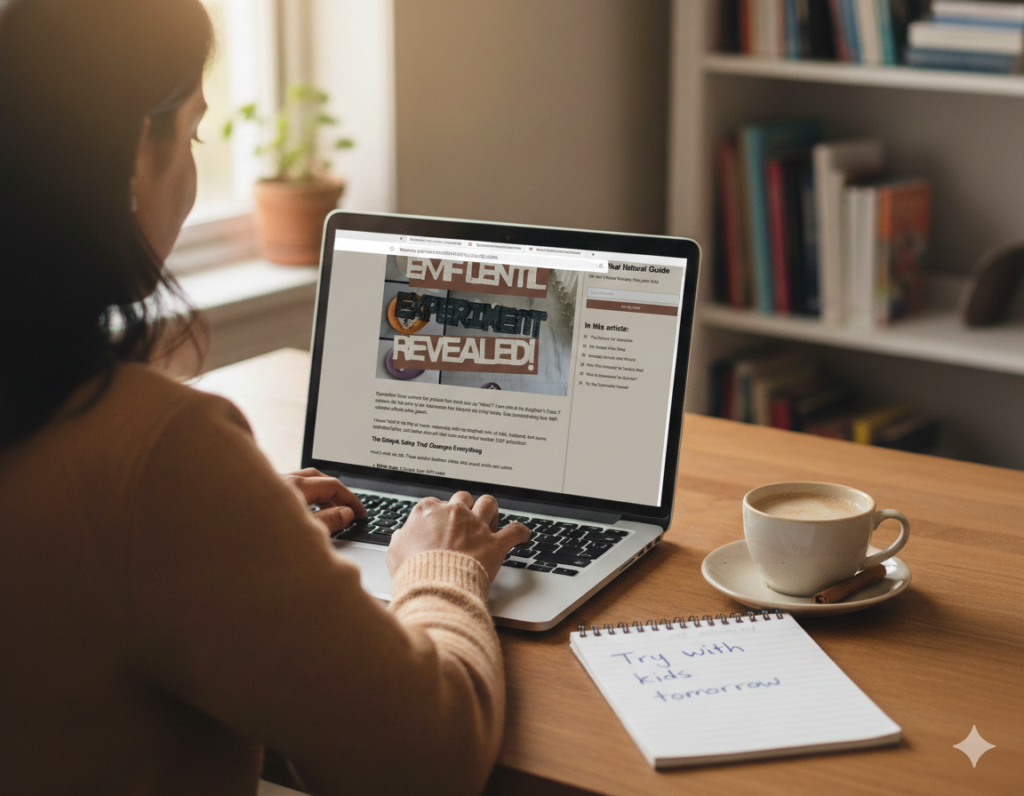
You can’t model what you don’t believe.
Here’s what I’m changing in my own head first:
- Metabolism: I ditched “my metabolism is slowing with age.” Now? “My body is becoming more efficient.” That’s not failure—that’s wisdom. My body knows exactly what it needs at 42, and it’s different from what it needed at 25. That’s not worse, it’s smarter.
- Stress: When my heart races before a client call, I pause and say: “My body is giving me energy for something I care about.” The research shows this single reframe changes your cardiovascular response from harmful to enhancing.
- Sleep: I am stopping obsessing over “8 hours or I’m doomed.” Now? “My body knows how much rest it needs tonight.” Some nights it’s 6 hours, some it’s 9. Trusting my body’s signals instead of fighting them can change everything— waking up more rested even with less “perfect” sleep.
- Quick win this week: Pick ONE of these reframes. Practice it 3 times daily. That’s it.
Your Growing Kids Need Different Scripts (Ages 10-15)
My 13-year-old rolled her eyes when I first said this. But I am excited to see the effects!
- Before tests or performances: “Feeling nervous means this matters to you—and your body is getting you ready to handle it.” NOT “Don’t be nervous.”
- Body changes: Focus on capability, not appearance. “Look how strong you’re getting” or “Your body is building exactly what you need.”
- Food as fuel: Connect nutrition to what THEY care about. “Protein helps your muscles recover from basketball” works better than “eat your vegetables.”
The 3-step stress process (teach during calm moments):
- Acknowledge: “I’m stressed about the group project”
- Welcome: “This matters because I care about doing well”
- Utilize: “I can use this energy to organize my part”
Try it once. See what happens.
Little Ones Are Absorbing Everything (Ages 3-6)

My 5-year-old nephew calls himself Spiderman!
- Movement language: “Running makes you faster! Climbing makes you stronger! Your body is amazing!”
- Don’t call it exercise. Call it discovering superpowers.
- Creative food naming: “Dragon fruit gives you dragon powers.” “Blueberries make your brain super strong.”
- Sounds silly? The milkshake study proved identical food produces different physiological responses based on labeling. If it works for adults, imagine what it does for the most powerfully developing brains.
- Before performances: “Butterflies mean your body is getting ready to be AWESOME.”
Early mindsets predict lifelong health behaviors. You’re not just getting them to eat vegetables—you’re setting neural pathways.
Your Young Adults Need This MOST (Ages 20-35)
If you have kids in this age range, or you ARE in this age range—listen up.
This is peak comparison culture. Instagram bodies, career pressure, “should I be further along?” syndrome.
- Body image reframe: “My body’s capability matters more than its appearance.”
- Not just saying it—implementing it. When you exercise, appreciate what your body can DO. “I can lift heavier than last month” will beat “I burned 300 calories” every single time.
- Career stress: Before a big presentation or interview, reframe nervousness as preparation. “My body is getting me ready to perform.” Brain imaging shows this reduces panic responses and activates rational thinking.
- Food freedom: The milkshake study matters MOST here before diet culture gets too entrenched. Label your food as nourishing, not as “good” or “bad.” Your metabolism literally responds better.
- If you’re trying to conceive: “My body knows how to do this.” Mindsets about fertility affect actual conception rates. This is in the research, not something I made up.
For Our Generation in Their Prime (Ages 60-75+)

I don’t want to tell my elders what to do. That feels wrong.
But if YOU’RE in this age group reading this, or if you want to gently share this research—here’s what matters most:
- Reframe aging as wisdom + capability: Dr. Crum’s research shows people who view aging positively have better memory, grip strength, and walking speed. Not “getting slower”—”moving smarter with decades of experience.”
- Your daily activities ARE exercise: Hotel housekeepers who were told their daily work was “good exercise” showed measurable weight loss and lower blood pressure—without changing anything they did.
- Gardening isn’t just growing vegetables—it’s building strength and balance. Walking to the market isn’t a chore—it’s maintaining independence and capability.
- Your body is communicating, not failing: Joint stiffness in the morning? “My body is warming up for the day.” Post-activity soreness? “My muscles are still working and growing stronger.”
- This isn’t denial. It’s reframing what your body is telling you from “everything’s beginning to break down” to “my body knows what it needs.”
- Stress means you care deeply: Worried about grandkids, health, finances? That stress shows you’re vital and engaged with life. “I’m feeling this because I care” changes how your nervous system responds—better cognitive function, better cardiovascular health.
- Eat for vitality, not restriction: Traditional dal-chawal? That’s ancestral energy food your body has known for decades. The milkshake study proved identical food produces 3x better metabolic response when you view it as nourishing rather than “watching calories.”
Enjoy your meals. Your body responds to belief.
You’re Not Faking Anything
This isn’t toxic positivity or “manifestation.”
You’re activating physiological systems that have always been there.
Your beliefs about food change hunger hormones. Your beliefs about stress change nervous system responses. Your beliefs about capability activate strength-building pathways.
The science is clear. The applications are simple.
Start wherever you are: Pick one reframe from YOUR age category. Try it for three days. Notice what shifts. Then layer in the scripts for your kids, your parents, whoever needs it most.
Model it first. Share it gently. Lead with curiosity, not correction.
I’m starting tonight at dinner with the food reframe. My family may make fun of me!
But I’m doing it anyway.
Which age group are you most excited to try this with? Email me at
[email protected] or DM me on instagram – vaidehi.yournaturalguide – I’d love to know!
PS: If you want to refer to my previous article on Dr. Crum’s research in the placebo effect please see- https://yournaturalguide.com/stanford-placebo-effect-metabolism/