
I was obsessed with candles.
Bath & Body Works every month. Every room smelled different. I would change the candles with the seasons and festivals.
Then I got pregnant and read the ingredients.
What’s Actually Inside That Pretty Jar
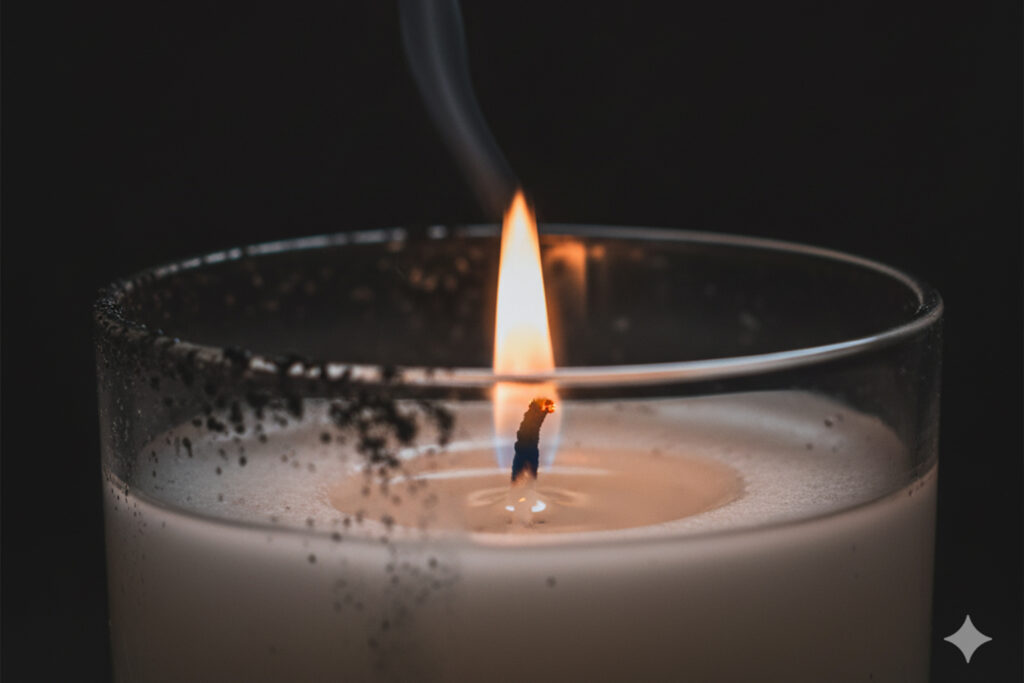
Most candles are made from paraffin wax—a petroleum byproduct.
When you light it, you’re releasing benzene, toluene, and formaldehyde into your home. Real carcinogens.
That “clean linen” smell? Petroleum scented with hormone-disrupting chemicals.
The Candle Hierarchy: Worst to Best
Paraffin Wax: Never Again
Big brands at discount stores, and even some very fancy branded ones. Expensive does not equal safe.
Paraffin releases toxic fumes similar to diesel exhaust. One study literally compared it to car emissions.
If the label doesn’t specify wax type, assume paraffin.
Soy Candles: It’s Complicated
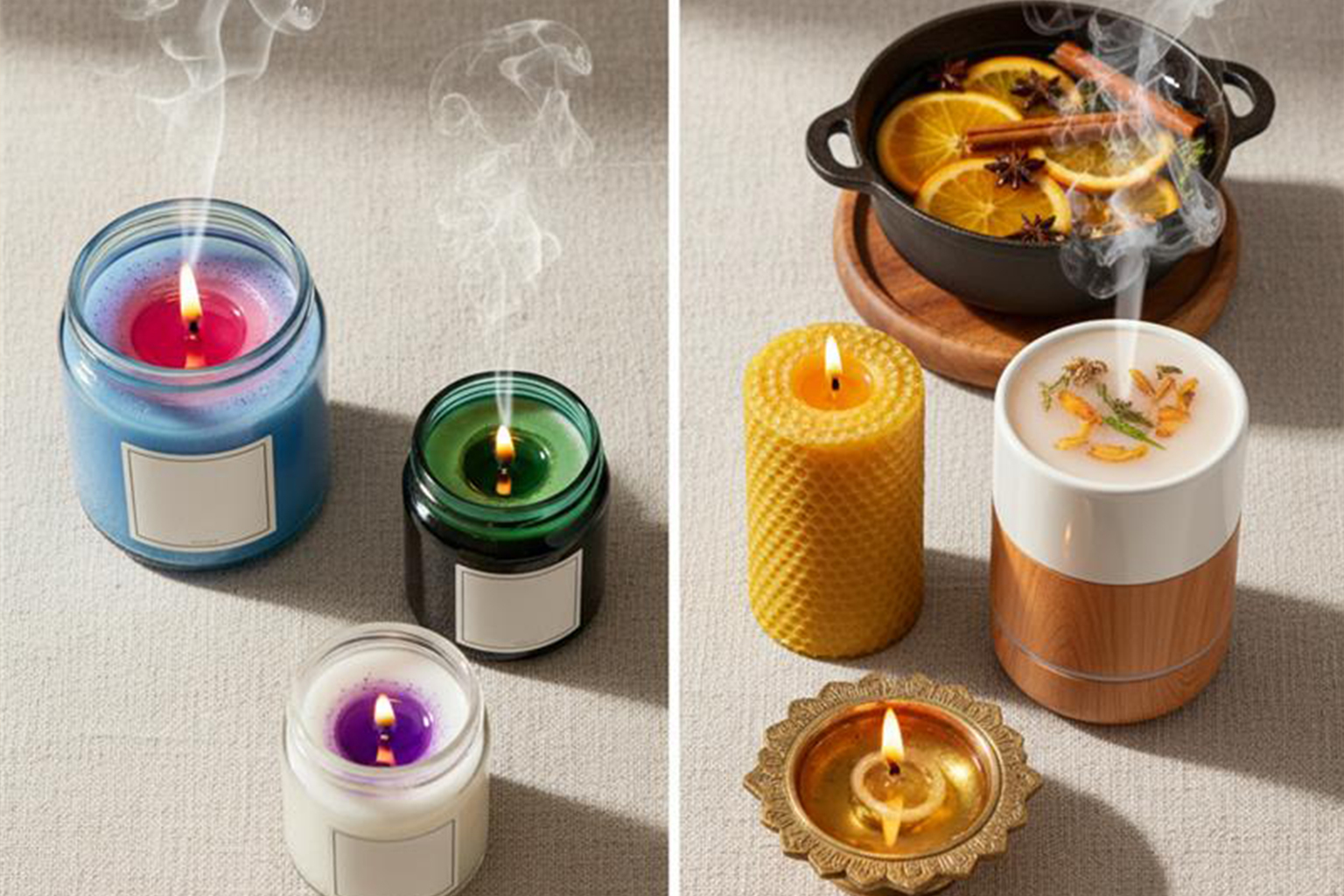
Soy definitely burns cleaner than paraffin—less soot, fewer toxins, made from a plant.
But most soy comes from GMO crops sprayed with pesticides.
Soy wax + fake vanilla = still poisoning your air.
If you go soy, only buy 100% soy wax with essential oils only. Good luck finding those.
Beeswax: What I Use Now
When beeswax burns, it releases negative ions that bind to pollutants and toxins—purifying air instead of poisoning it.
- A slight honey scent. Burns slower. Lasts longer. Minimal soot.
- They are expensive, but last 2-3x longer and improve air quality.
- Worth it. I use for Tratak meditation, writing an article on that next!
Coconut Wax: Worth Trying
- Burns clean like beeswax. Sustainable sourcing. Better than soy.
- Just watch for “coconut-soy blend” that’s mostly soy with a tiny bit of coconut for marketing.
Better Alternatives That Work For Scent
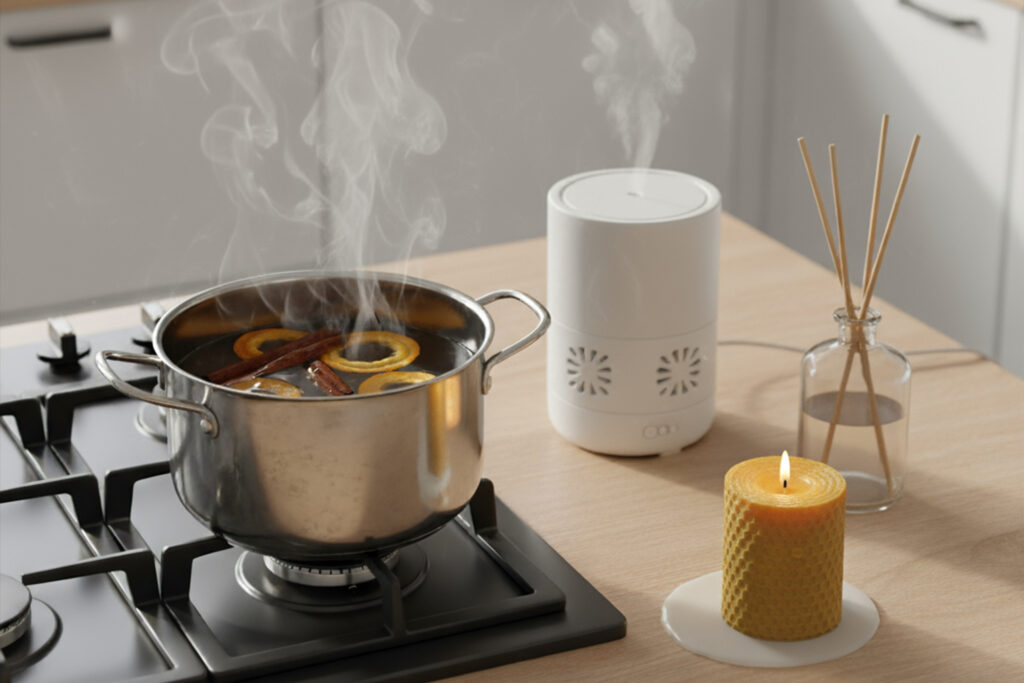
Essential Oil Diffusers
- Can completely curate what scent is in your air.
- I use a ceramic electric diffuser with pure essential oils. Lavender before bed. Peppermint for focus.
- No combustion, no soot, no mystery chemicals.
Simmer Pots
- Most budget-friendly and fresh option.
- Boil water with orange peels + cinnamon sticks + cloves in a pot on low for 15 minutes.
- Whole house smells amazing. Zero toxins. Uses ingredients you already have.
Traditional Ghee Diyas
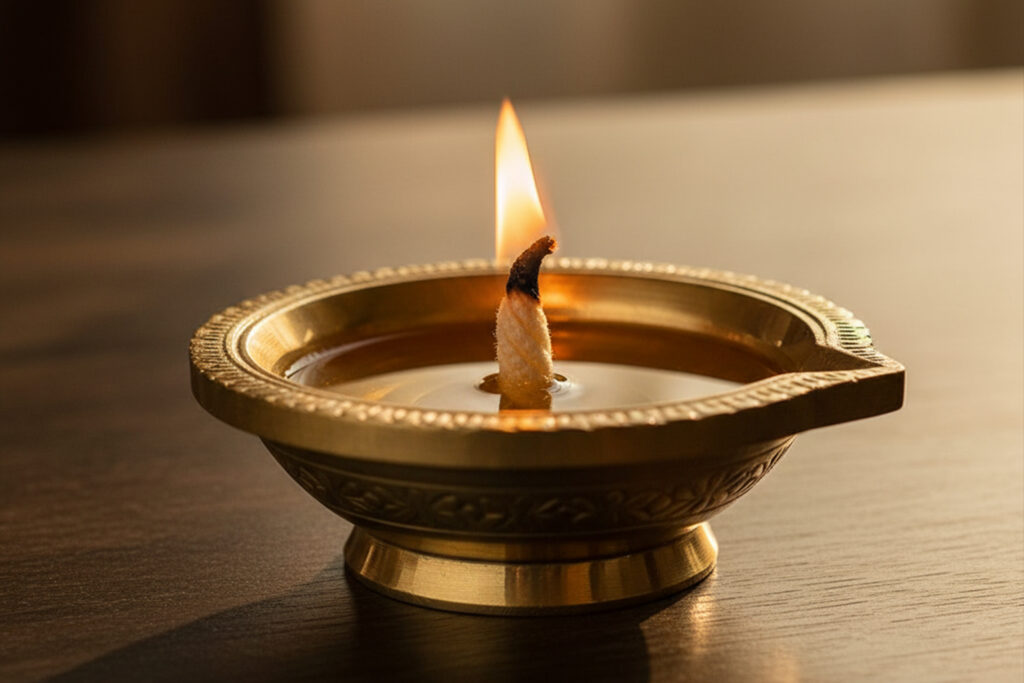
Brass or clay lamp. One teaspoon ghee. Cotton wick. Ghee burns very clean—no soot, no toxins.
Research shows watching real flames lowers blood pressure and calms the nervous system.
Tratak—yogic flame gazing—uses this exact principle. You stare at a candle flame to improve focus, digestion and cleanse your eyes after a long day.
Only using clean-buring flames, never paraffin. (Imagine staring at diesel fumes for 15 minutes.)
I’m publishing a full article soon about the deeper benefits of traditional fire rituals and tratak meditation—ancient practices that modern neuroscience is now confirming.
Reed Diffusers (Done Right)
- Mix fractionated coconut oil + essential oils in a jar. Add bamboo reeds, and turn them weekly.
- Constant subtle scent. No flame. Lasts weeks.
- Don’t buy commercial ones—they use synthetic fragrances too.
My Actual System
- Everyday scent: Electric Essential oil diffuser and Reed diffusers in different spots. Citronella diffusers near the main door to prevent mosquitoes entering, peppermint in my work space, lavender at night.
- Evening Tratak Meditation: My beeswax candle
- Traditional Festivals: Brass or silver diya with ghee
- Seasonal vibes or dinner parties: Simmer pot with seasonal ingredients.
- Bedrooms: Nothing burning.
The Bottom Line
- That cozy candle might be slowly poisoning you.
- But better alternatives exist that work just as well. Sometimes better.
- You don’t need synthetic vanilla cupcake toxins for ambiance.
- Start with one swap. Replace your most-used candle with a diffuser, beeswax candle, or ghee diya.
- Not perfect. Just better.
Stay tuned—I’m publishing soon about the deeper benefits of mindfully lighting real flames. Ancient wisdom that modern science is now confirming. The health benefits go way beyond just “clean air.”
Small changes. Big impact.
What will you implement after reading this? Take 2 minutes to write it down – our brains forget 90% of what we read within 24 hours unless we actively engage with it. Email yourself a reminder and cc me at [email protected] to start a conversation!
Research Sources & Citations
- Masuk, N. I., et al. (2011). “Determination of the carbonyl compounds formed from combustion of candles.” Journal of Environmental Monitoring, 13(10), 2748-2754.
- Petry, T., et al. (2014). “Review of data on the release of VOCs from burning candles.” Regulatory Toxicology and Pharmacology, 69(3), 410-419.
- Derudi, M., et al. (2014). “Emission of air pollutants from burning candles with different composition.” Environmental Science and Pollution Research, 21(6), 4320-4330.
- Kim, K. H., et al. (2011). “The emissions of major VOCs from candle burning and their association with allergic diseases.” Journal of Hazardous Materials, 190(1-3), 1-5.
- Lynn, C. D. (2014). “Hearth and campfire influences on arterial blood pressure.” Evolutionary Psychology, 12(5), 983-1003.