


Last month, a client asked me something I’d honestly never thought about.
“Vaidehi, we live next to this beautiful golf course. Should I be worried about pesticide exposure?”
We’re not a golfing family, and the closest course to us is still quite far from our home. But her question got me curious. What does the research actually say about living near golf courses?
What I found completely shocked me.
The Mayo Clinic tracked 419 Parkinson’s patients for 25 years and discovered that living within a mile of a golf course increases your Parkinson’s risk by 126%.
That pristine green view comes with a hidden cost that most people never consider.
The Reality Nobody Talks About
Golf courses use pesticides at rates 5-7 times higher than farms. The worst part? That stuff doesn’t stay put.
Chlorothalonil—the #1 fungicide currently under review for toxicity—travels through rain runoff into water supplies, wind-carried particles to your windows, and even on golfers’ clothing.
The health impacts extend far beyond Parkinson’s: cancer, hormone disruption, fertility issues. Kids get hit the hardest.
When I first learned this, I was overwhelmed. Living in Delhi, we already deal with pollution. Additional chemical exposure felt daunting.
But then I remembered what my grandfather always says at Jindal Naturopathy Institute: “Every acute disease is the result of the cleansing and healing effort of nature.”
So I dove deeper into research to find evidence-based solutions.

Research-Based Protection Strategies
Air Quality: Your First Defense
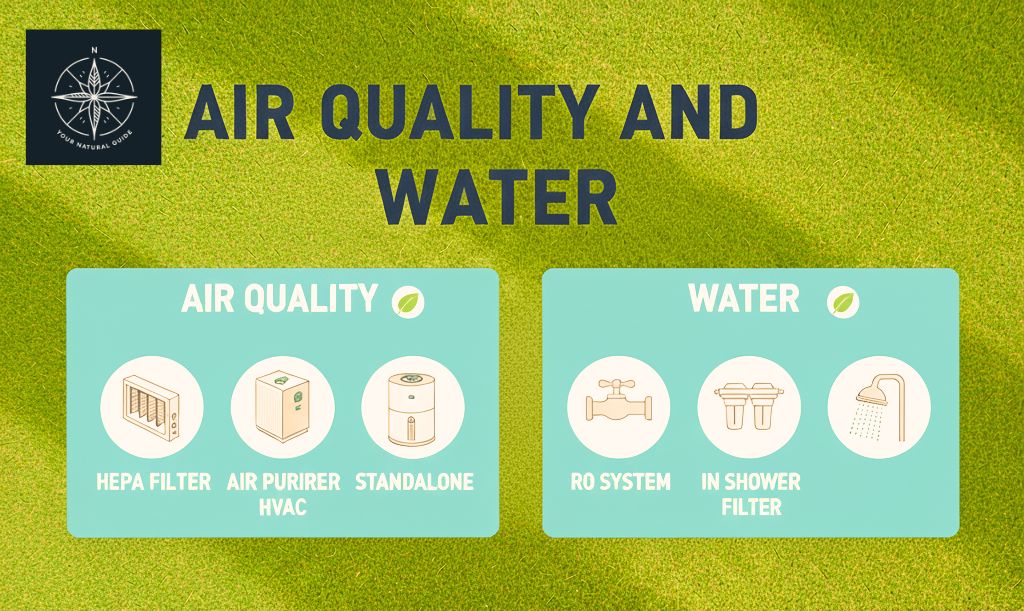
Studies show HEPA filtration systems are non-negotiable. TRUE HEPA captures 99.97% of particles 0.3 micrometers and up—including pesticide-laden dust.
Research recommends whole-house systems, but portable units with activated carbon work too. Size for 4-6 air changes per hour.
Evidence-based timing: Closing windows during morning applications and keeping HVAC on recirculate for 24 hours after spraying reduces indoor exposure by 70-90%.
Peak spray seasons are spring (March-May) and fall (September-October). (Check with your local course about their weekly spraying schedule)
Water: The Critical Priority
Research shows municipal water systems near golf courses have 96% higher contamination rates.
Studies prove reverse osmosis provides 100% pesticide removal. Whole-house RO offers comprehensive protection; point-of-use systems work for drinking water.
Budget-conscious? Granular activated carbon (GAC) systems match RO effectiveness for most pesticides when properly maintained. Use in shower water filters!
Nutritional Support: Enhance Your Body’s Detox
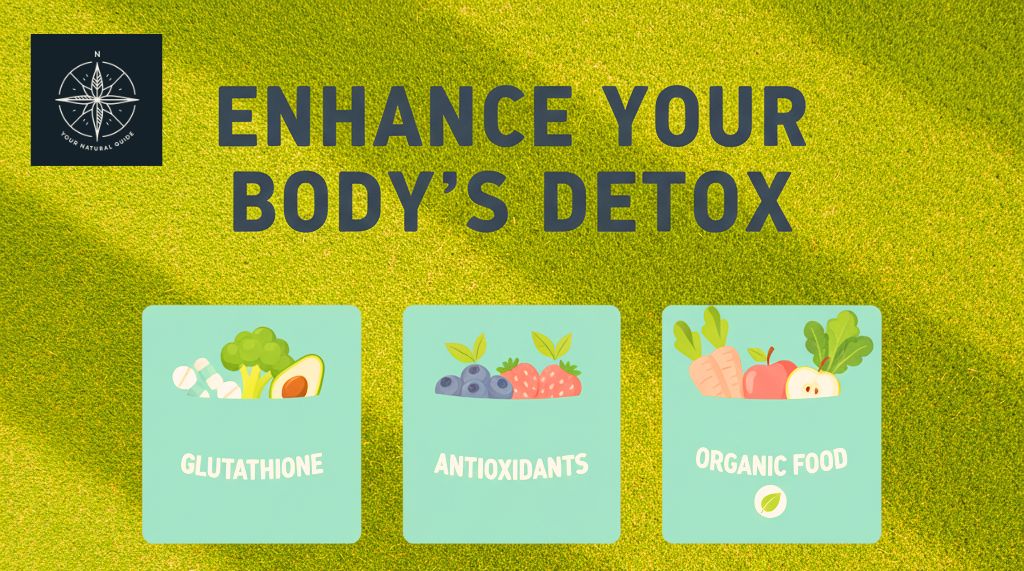
Research shows targeted nutrition significantly enhances natural detoxification.
Glutathione is crucial for pesticide elimination:
- NAC: 600-1200mg daily for optimal bioavailability (eggs, garlic, sunflower seeds boost it)
- Glycine: 3-5g daily (or magnesium glycinate for sleep benefits too)
- Selenium: 200mcg daily (or 2 Brazil nuts)
Antioxidant protection:
- Liposomal Vitamin C: 1000-2000mg daily (tastes awful, but works better in Liposomal form)
- Natural Vitamin E: 400-800 IU daily
- Green tea extract: either drink 2-4 cups daily or take the extract. Research shows it boosts your antioxidant levels by 72%.
Here’s what blew my mind: Just switching to organic food drops pesticide levels in your body by 70% in one week. One week!
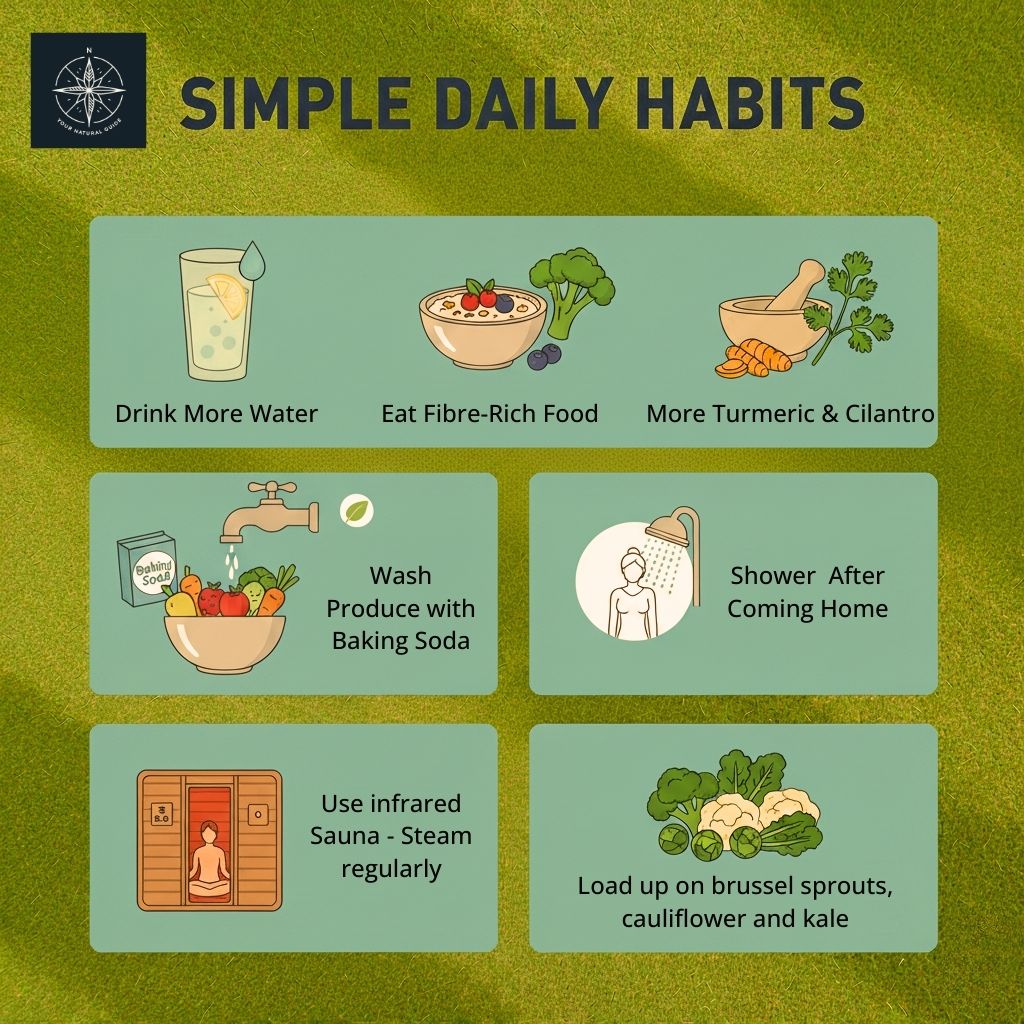
Simple daily habits that help:
Drink more water, eat fiber-rich foods, add turmeric to your cooking. Cilantro is amazing for pulling out heavy metals and pesticides – throw it in everything.
- Always wash your produce well. A quick baking soda soak gets surface pesticides off better than just water.
- Shower and change clothes right after being outside near treated areas. Don’t track that stuff inside.
- Infrared saunas/saunas/steam help sweat toxins out too if you have access to these.
- Load up on broccoli, Brussels sprouts, cauliflower, and kale. These powerhouse veggies ramp up your detox enzymes by 40-60% when you eat 2-3 servings daily.
Plants That Actually Fight Back
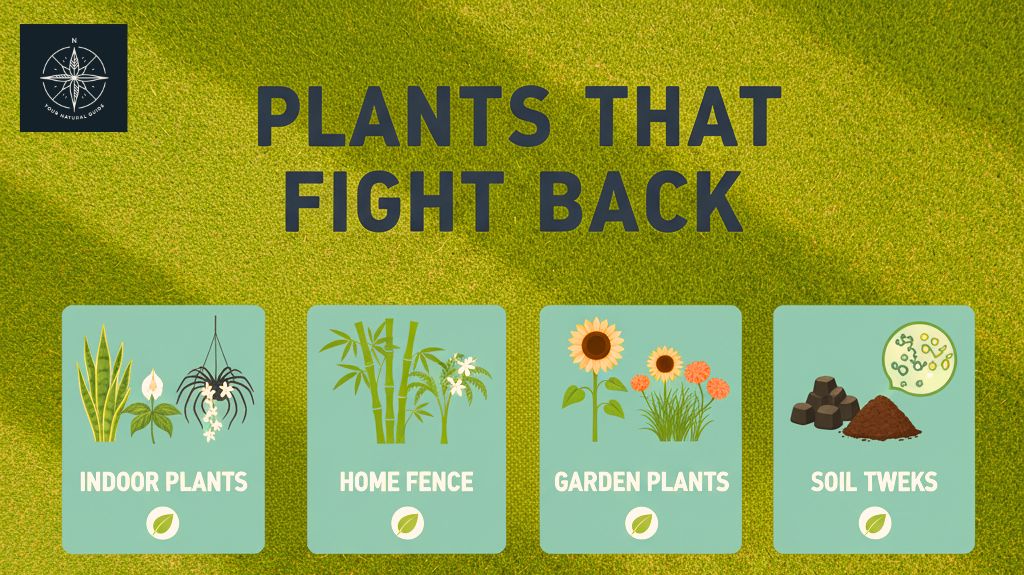
Certain plants literally clean the air and soil around them – it’s called phytoremediation and it’s pretty amazing.
- Inside your house: Aim for one plant per 100 square feet. Snake plants are fantastic (they work at night too), spider plants are nearly indestructible, and peace lilies look beautiful while removing formaldehyde, benzene, and toluene.
- Around your property line: Think of creating a living wall. Plant bamboo, areca palms, neem trees, tulsi, lemongrass – whatever grows well in your area. If you can put up a taller fence, let climbing plants like money plant, ivy, or jasmine cover it. They literally catch chemical particles before they reach your home.
- In your garden: Sunflowers, vetiver grass, and marigolds are like little vacuum cleaners – they pull contaminants right out of the soil. Mix biochar or good compost into your soil to bind toxins before your vegetables can absorb them.
- Soil tweaks: Sprinkle activated carbon around your garden twice a year (about 2-4 pounds per 100 square feet). Add mycorrhizal fungi and plenty of compost – aim for about 25-30% compost mixed in. Your soil microbes will love you.
- Proof it works: There’s this golf course in Massachusetts, US – Vineyard Golf Club – that’s 100% organic and still hosts tournaments. They use beneficial bacteria and natural fertilizers instead of chemicals. If they can do it, every course can.
Start Here
Research shows these first-week priorities are most effective:
- Install basic activated carbon water filter or RO
- Begin NAC and vitamin C supplementation (or through natural sources)
- Add 2-3 air-purifying plants
- Contact nearby courses for spray schedules
The 126% increased Parkinson’s risk doesn’t have to be accepted.
After digging through research for my client, I realized how many families could benefit from these evidence-based strategies.
Ready to follow the research? Start with one strategy today. The data shows it makes a difference.
Key Research Sources
Mayo Clinic 25-year epidemiological study, golf course leachate analysis, municipal water contamination research, organic diet transition studies, HEPA filtration effectiveness data, reverse osmosis pesticide removal research, glutathione synthesis pathway studies, and Vineyard Golf Club case study proving organic management viability.
What will you implement after reading this? Take 2 minutes to write it down – our brains forget 90% of what we read within 24 hours unless we actively engage with it. Email yourself a reminder and cc me at [email protected] to start a conversation!