
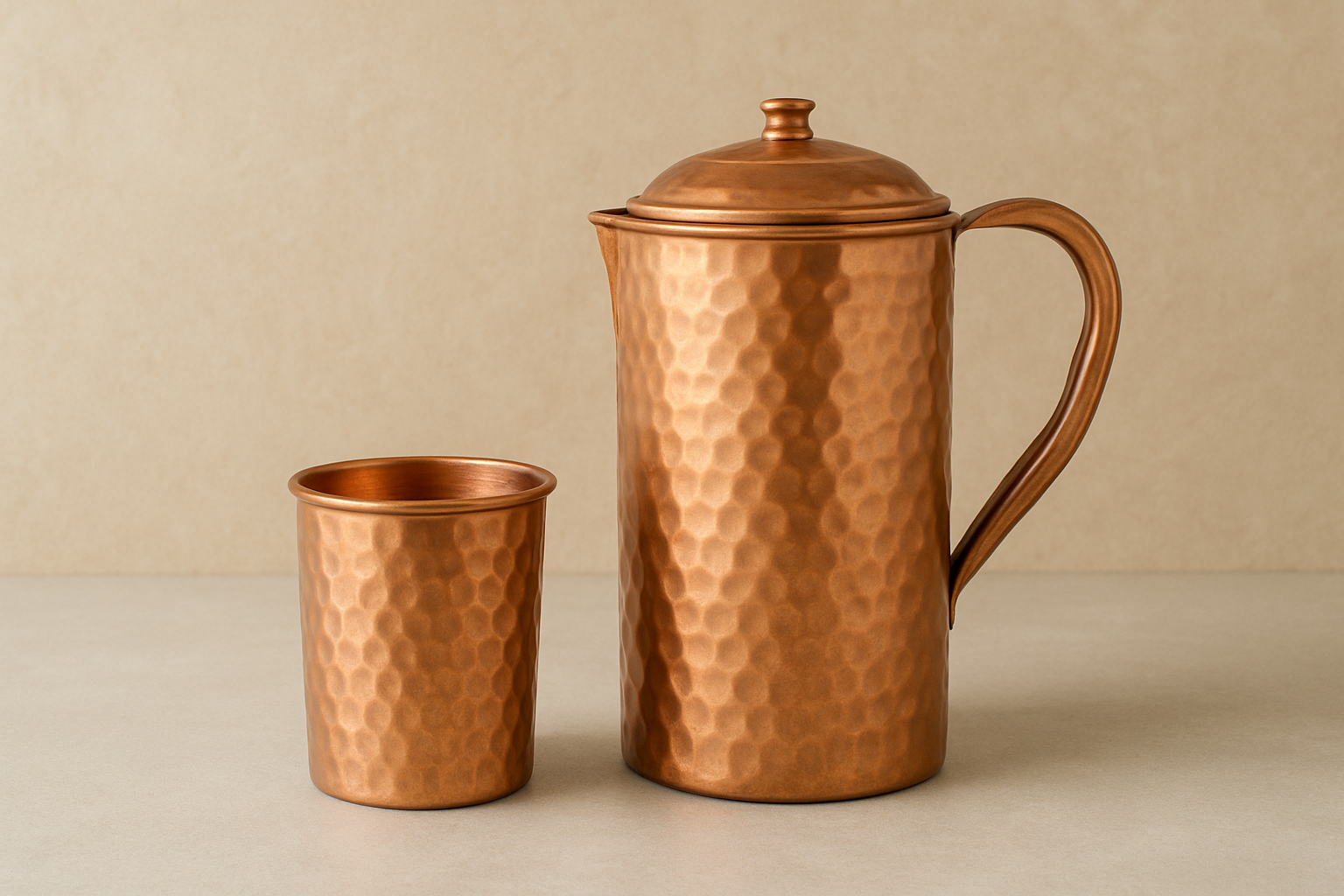
When Everyone Started Drinking Copper (And Then I Got Suspicious)
Over the past few years, I’ve watched this trend explode. Fitness influencers with shiny copper bottles, wellness blogs claiming miracle benefits, every health-conscious person in Delhi carrying copper vessels.
My family and I jumped on the bandwagon too. “This is ancient wisdom!” we said.
But here’s the thing about health fads – they rarely tell the whole story. So I dug into the research. What I found about copper vessels, India’s soil crisis, and our zinc deficiency epidemic shocked me.
The Uncomfortable Truth About Copper Water Benefits
Our ancestors swore by copper vessels. Ayurvedic texts praise copper water. It’s cultural DNA at this point.
But those ancient texts didn’t predict:
- Industrial pollution contaminating our soil
- Heavy metal accumulation in agricultural lands
- Zinc deficiency affecting 109 million Indian children
- Copper fungicides saturating our food supply
The science is crystal clear: most purported benefits of copper water aren’t backed by studies, while mounting evidence shows significant risks from excessive copper intake.
The Dose Makes the Poison
When 60 healthy adults consumed water with varying copper levels for 2 weeks, gastrointestinal symptoms occurred in 5-23% of participants depending on concentration.
Here’s the kicker: Water stored in copper containers reaches 180 parts per billion in just 16 hours. EPA’s action level for copper in drinking water? 1.3 mg/L. Your overnight copper water is probably exceeding safe limits.
India’s Hidden Heavy Metal Crisis
Research analyzing soils across India shows mean copper values of 183.67 μg/g, with contamination factors indicating dangerous levels. Gujarat, Maharashtra and Andhra Pradesh contribute to 80% of hazardous wastes including heavy metals.
Translation: Our food is already copper-loaded before it reaches your plate.
Modern farming uses copper sulfate fungicides, copper oxychloride treatments, and phosphate fertilizers loaded with heavy metals. The terrifying part? Copper doesn’t decompose. It accumulates forever.
At Khetri Copper Mine in Rajasthan, soil copper concentrations reach 1,224 mg/kg – 32 times higher than local background soil.
The Zinc Deficiency Epidemic Nobody’s Talking About
While we’re getting too much copper, we’re starving for zinc. India’s National Nutrition Survey found 31% of adolescents, 16% of school-aged children, and 17% of preschool children are zinc deficient.
Zinc and copper have an inverse relationship – excess copper automatically lowers zinc levels. Zinc is crucial for immune function, DNA repair, healing, and hormonal health.
So every extra sip of copper water potentially:
- Reduces zinc absorption
- Weakens immune function
- Affects cognitive development
Studies link excess copper to depression and anxiety because it lowers dopamine. Research connects copper toxicity to ADHD and autism spectrum disorders.
For women: birth control pills, copper IUDs, and hormone therapy increase estrogen, causing the body to retain more copper.
The Hidden Danger: Improper Cleaning
Here’s what shocked me: Most people don’t know there’s a right and wrong way to clean copper vessels!
Research shows that clean copper surfaces are effective for antimicrobial action. However, when cleaned with harsh chemicals, there’s residue buildup and decreased effectiveness.
The Proper Method
- DO: Mix ¼ cup lemon juice/white vinegar with water. Fill the vessel and let stand for 30-45 minutes. Scrub gently with salt and lemon halves and rinse, dry immediately with soft cloth.
- DON’T: Use harsh chemicals, steel wool, or let air-dry.
- Warning: Some sellers varnish copper vessels to prevent tarnishing, meaning you’re storing water exposed to dangerous chemicals.
My Evidence-Based Recommendations
I’m not asking you to throw away family heirlooms, but I am suggesting moderation (I’ve completely stopped using copper vessels personally).
DO:
- Limit to 1 glass of copper water daily
- Use high-quality, pure copper vessels
- Clean properly with natural solutions
DON’T:
- Use copper bottles throughout the day
- Store water for more than 8-12 hours
- Use if pregnant, breastfeeding, or on hormonal treatments
Zinc Optimization
Prioritize zinc-rich foods: pumpkin seeds, sesame seeds, chickpeas, lentils, spinach.
When to Consult Your Doctor
Get tested if you experience chronic fatigue, poor wound healing, frequent infections, mood disorders, or digestive issues AND have been drinking regularly from copper vessels.
The Bottom Line
Traditional wisdom meets modern toxicity.
- Our grandmothers grew up in a different world – cleaner soil, minimal industrial pollution, zinc-rich foods.
- Today’s reality: contaminated agricultural land, heavy metal accumulation, widespread zinc deficiency, and improper cleaning methods reducing benefits while increasing risks.
- The research doesn’t lie. Your family’s health is worth more than blind tradition.
Use copper vessels mindfully, not habitually. Because in 2025, moderation isn’t just wisdom. It’s survival.
Referenced Studies:
- Healthline – Copper Water: Basics, Benefits, and Downsides (September 2, 2020)
- Community-Based Randomized Double-Blind Study of Gastrointestinal Effects and Copper Exposure in Drinking Water – PMC
- Storing Drinking-water in Copper pots Kills Contaminating Diarrhoeagenic Bacteria – PMC
- WHO Background Document: Copper in Drinking-water (2004)
- Copper in Drinking Water – MN Dept. of Health
- Pollution assessment of heavy metals in soils of India and ecological risk assessment: A state-of-the-art – ScienceDirect (2018)
- From soil to health hazards: Heavy metals contamination in northern India and health risk assessment – ScienceDirect (2024)
- Source and Assessment of Metal Pollution at Khetri Copper Mine Tailings and Neighboring Soils, Rajasthan, India – PubMed
- Inadequate Zinc Intake in India: Past, Present, and Future – Matthew R. Smith, et al. (2019)
- Prevalence of low serum zinc concentrations in Indian children and adolescents: Findings from the comprehensive national nutrition survey 2016-18 – ScienceDirect (2021)
- The India CNNS: A monumental survey identifying those at most risk of zinc deficiency — IZiNCG (2021)
- Luke Coutinho – Drinking Water Out Of A Copper Vessel? Here’s What You Should Be Careful Of (2024)
- Contact Killing of Bacteria on Copper Is Suppressed if Bacterial-Metal Contact Is Prevented – PMC
- Metallic Copper as an Antimicrobial Surface – PMC
- Cleaning Your Copper Vessel — Vasanti Health
- How to Clean Copper: Complete Guide – Copper H2O (2017)