
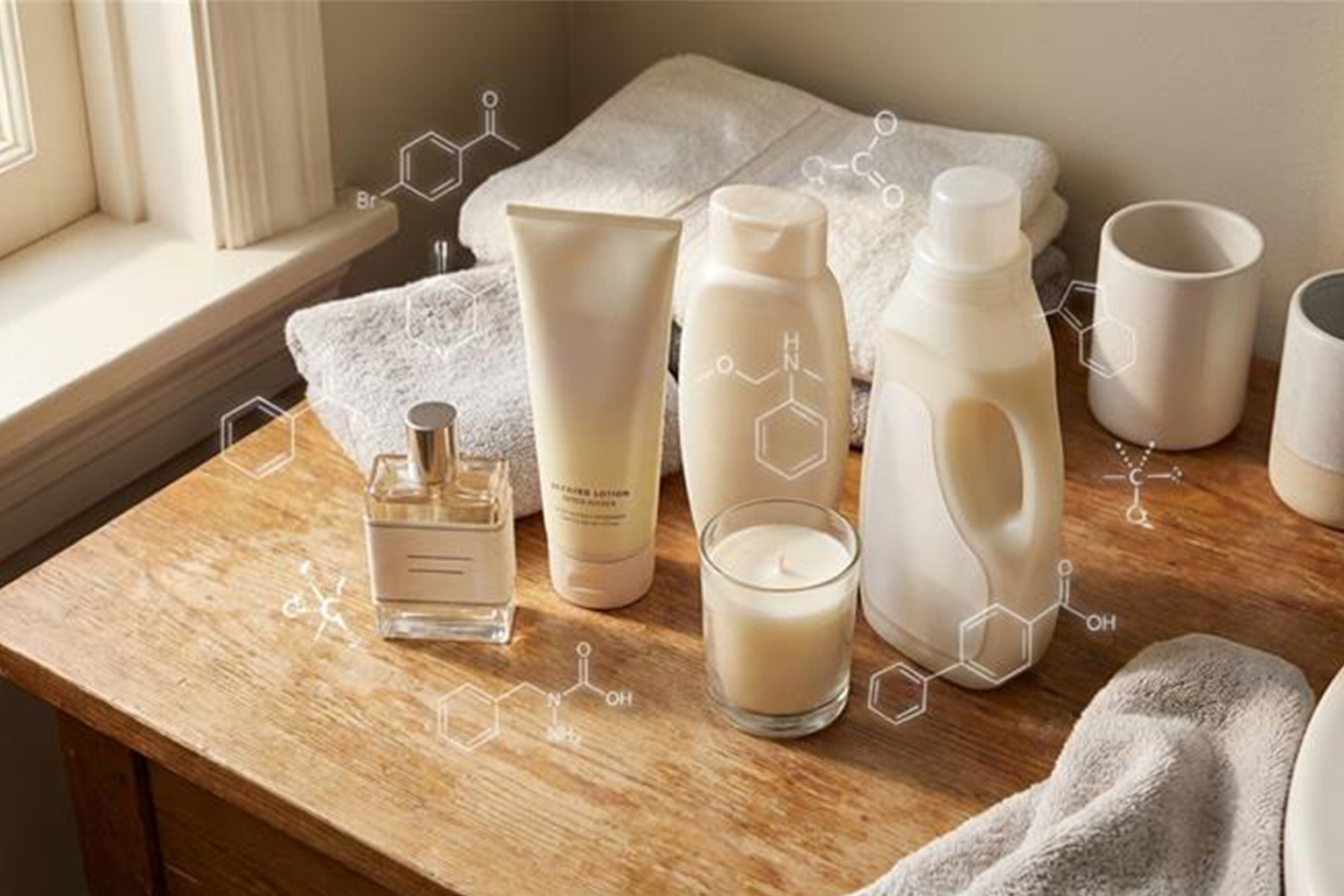
Last week, a friend asked me: “Is this fragrance-breast cancer link actually true?”
“Yes,” I said. “The research is real.”
His response surprised me (yes, he is male): “Even I don’t want to use fragrance then. What are the options?”
This affects everyone, it’s not only a women’s health concern. And most people have no idea where to start or what to swap out, thinking it is just unavoidable.
One Big Reason Why I Started This Work
I was almost 40 when I started hearing of diseases cropping up to friends and family— breast cancer, cholesterol, high blood pressure, hormonal disorders. All around age 40. Active, health-conscious people. No obvious risk factors for many.
I couldn’t stop asking: What are we all being exposed to that we don’t even know about?
The more I researched the more the science threw up undeniable facts – we’ve slowly but surely been moving towards living in a chemical soup. The products we use instinctively—the ones that smell “fresh” and “clean” —are often the most dangerous.
Prevention begins long before diagnosis.
What You’re Actually Doing Every Day
Your morning routine probably looks like mine used to: shower with that body wash you love, spray on deodorant, slather on lotion, a couple of spritz of perfume, redose through the day as you step out. Also, laundry with fabric softener that makes your whole house fresh, a candle burning in the evening.
Here’s what I wish someone had told me years ago: Every single one of those moments? You’re dosing yourself with chemicals linked to breast cancer, messed up hormones, and reproductive damage.
The 28-Day Study That Proves You Can Reverse the Damage – this has really got everyone’s attention!
The most groundbreaking research came from Dairkee et al. (2023), published in Chemosphere (PMID 36746253). This wasn’t a lab study on rats—this was real human breast tissue.
The Study:
For just 28 days, women who regularly used products with parabens and phthalates eliminated these chemicals.
The Results:
- Gene Expression Reversed: Dramatic changes in cancer-risk gene pathways—genes that regulate cell growth and division returned to normal patterns
- PI3K-AKT/mTOR Pathway Normalized: This pathway drives tumor growth when overactivated. After 28 days, it returned to healthy function
- Cellular Repair Restored: Autophagy (cellular cleanup) and apoptosis (damaged cell death) resumed normal patterns
- Chemical Levels Dropped: Urinary tests showed significant reduction in paraben and phthalate metabolites
The Study’s Stunning Implications:
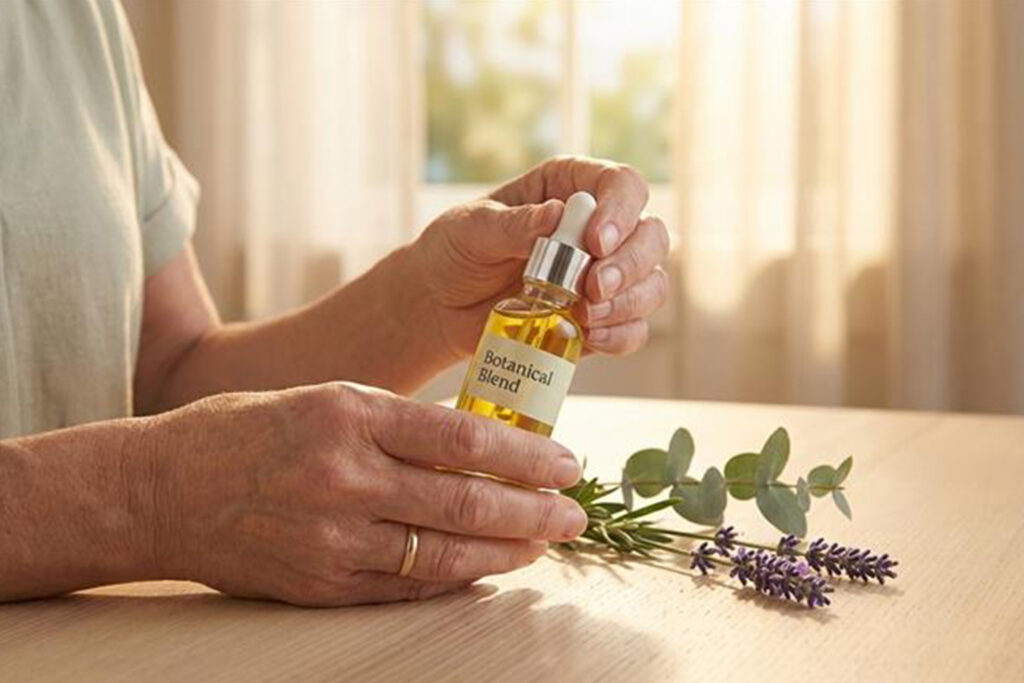
The damage is not permanent. When you stop exposure, your breast tissue begins reversing cancer-associated changes within weeks. You can change your trajectory starting today. And this is what is giving people hope and wanting to switch – even change that begins today can reverse damage done!
How Fragrances Actually Work (And Why Your Body Can’t Tell the Difference)
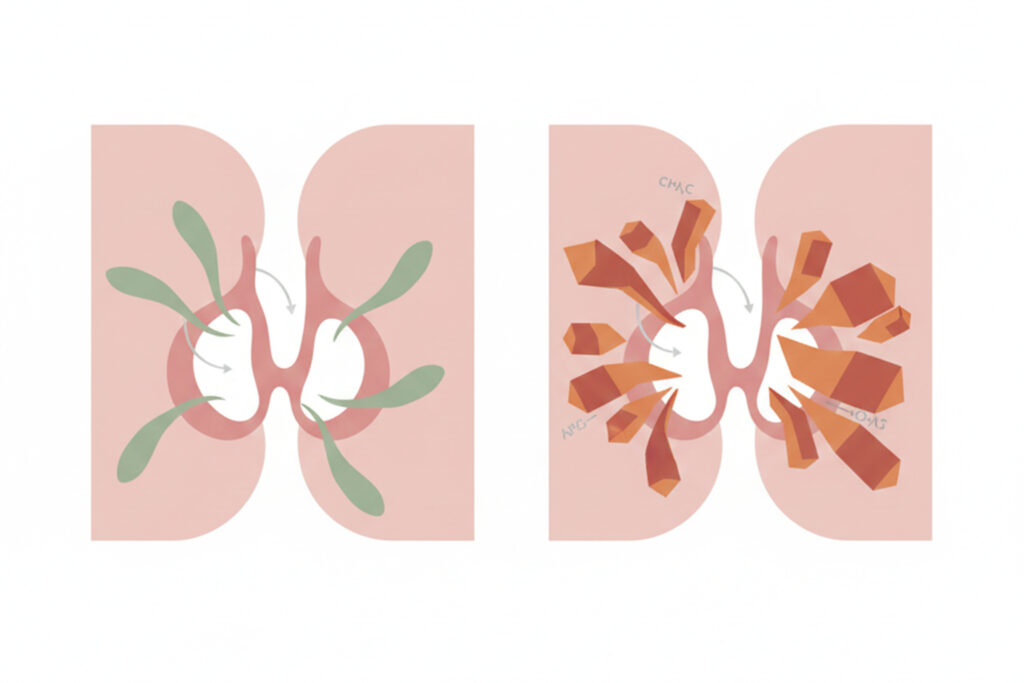
When you spray that perfume or use that scented lotion, chemicals—phthalates, parabens, synthetic musks—go through your skin and into your bloodstream. Fast, within minutes.
And here’s the scary part: They pretend to be your hormones.
Your body has estrogen receptors in breast tissue. These fake chemicals bind to those same receptors and tell your cells to grow abnormally. Your body literally cannot tell the difference between your real estrogen and these chemical imposters. Scientists call this the “xenoestrogen effect.”
Oh, and the fragrance industry? They hide all of this behind one word on the label: “fragrance.”
One study tested 25 personal care products and found 338 different chemicals hiding behind that one word. Want to guess how many were linked to cancer and birth defects? 99.
The 5 Swaps That Matter Most
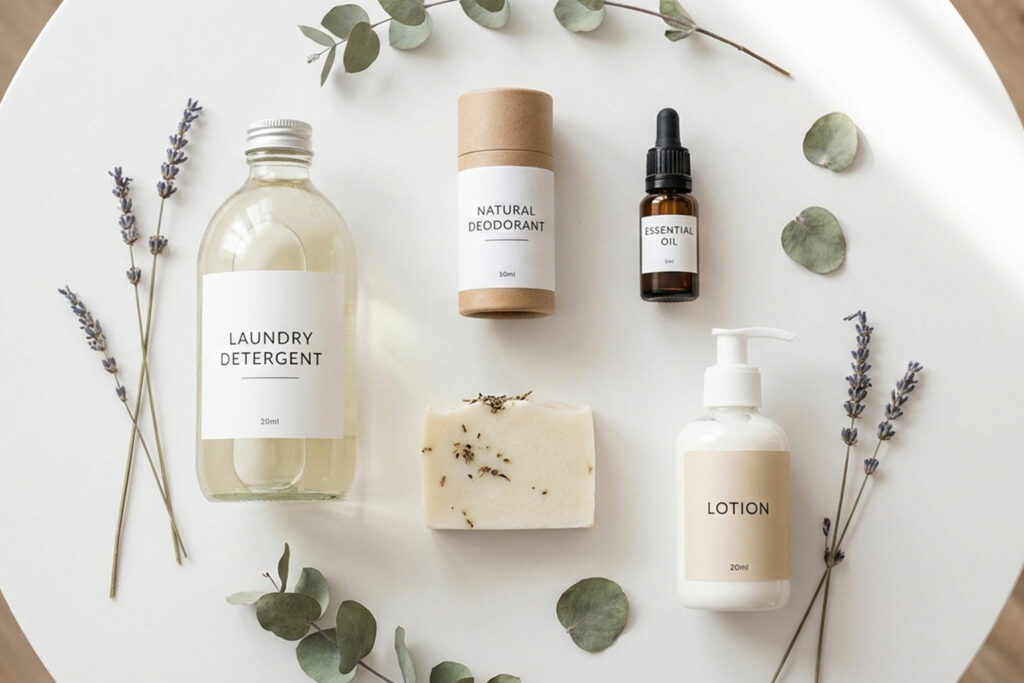
Small, consistent changes matter more than changing everything together. Focus on the most high-exposure products first. Top 5 in order of impact:
- Laundry Detergent – Clothes touch skin 8+ hours daily. Switch to fragrance-free. Highest exposure.
- Deodorant – Thin underarm skin = direct bloodstream access. Aluminum accumulates in breast tissue. Choose aluminum-free, fragrance-free or with natural essential oils.
- Perfume/Body Spray – Direct lung inhalation. Switch to pure essential oils only and minimize use.
- Body Wash – Warm water opens pores = increased absorption. Choose fragrance-free, sulfate-free. Or switch to a natural bar soap!
- Lotion – Large surface area application. Parabens accumulate in breast tissue. Minimal ingredients only or switch to cold pressed oils.
The Real Cost of Ignoring This
Parabens have been found in human breast tumor tissue. Women exposed to multiple fragrance chemicals have higher estrogen levels and increased breast cancer risk.
You can’t see this happening. No immediate symptom. That’s why it’s easy to be complacent in this and indulge the olfactory system!
Even for someone who thought they did everything right like eating organic and exercising, this is one area they are missing in living cleaner. We are swimming in endocrine disruptors they didn’t know existed.
This Is Not About Perfection
I’m not asking you to throw everything out by Tuesday.
This work is slow. This work is meaningful. This is the work that protects your health.
Start with laundry detergent. One product. Two weeks. Then pick 2. Small changes compound.
The 28-day study proves you don’t need to be perfect forever—you need to be consistent for 28 days to see measurable change. Then keep going.